








Jasper Stone Benefits, Types & Who Can Wear It
Jasper is the opaque, earth-toned member of the quartz family, and one of the oldest worked stones on the subcontinent — India is itself a major source, and Indian agate and jasper have been carved and traded for thousands of years. In crystal tradition jasper is the archetypal grounding and endurance stone: the one worn for steadiness rather than inspiration. Red jasper in particular is associated with Mangal (Mars) in Vedic practice. Here is what jasper is, the varieties worth knowing, who traditionally wears it, and how to spot the dyed material that fills the low end of the market.
Jasper: quick facts
| Also called | The Supreme Nurturer; red jasper is sometimes traded as a Moonga substitute |
| Mineral | Opaque microcrystalline quartz (chalcedony) with mineral impurities |
| Traditionally worn for | Grounding, courage, endurance, protection, stability |
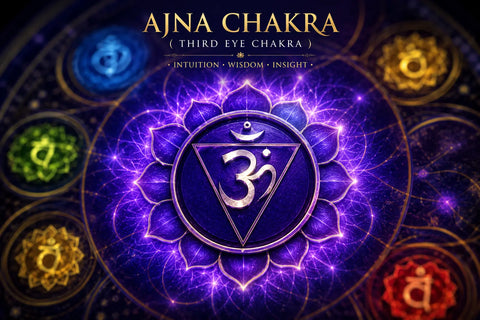
| Chakra | Root (Muladhara) — solar plexus for the yellow varieties |
| Planet (Vedic) | Mangal (Mars), for the red varieties |
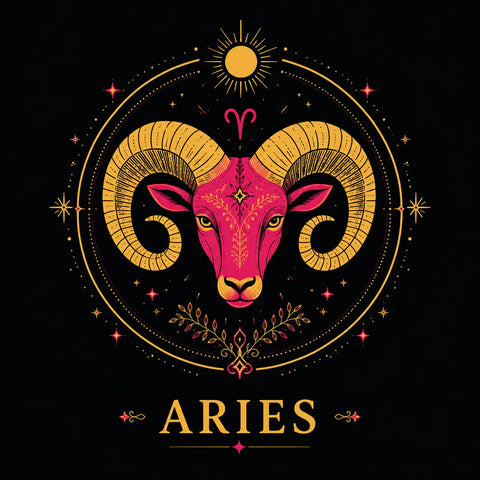
| Rashi | Mesha (Aries), Vrishchika (Scorpio) |
| Hardness | 6.5–7 on the Mohs scale |
| Wear on | Left hand for grounding; right for courage and drive |
| Water safe | Yes, briefly — it is porous, so avoid soaking |
What jasper is and where it comes from
Jasper is chalcedony — microcrystalline quartz — that contains enough mineral impurity, usually 15% or more, to make it fully opaque. That opacity is what separates jasper from its close relatives: agate is translucent and banded, carnelian is translucent orange, and chalcedony proper is translucent. All are the same underlying mineral in different dress.
The impurities are what give jasper its colours and patterns. Iron oxide produces the reds and browns, goethite the yellows, and various inclusions produce the landscapes, orbs and dendrites that make jasper the most visually varied gemstone family in the world.
India is a genuinely significant source. The Deccan trap basalts of Gujarat and Rajasthan have produced agate and jasper for millennia, and the cutting centres around Khambhat (Cambay) in Gujarat have been working these stones since antiquity. Other major sources include Madagascar, Brazil, Australia (which supplies mookaite from the Kennedy Ranges in Western Australia), Russia, South Africa and the United States.
The jasper varieties worth knowing
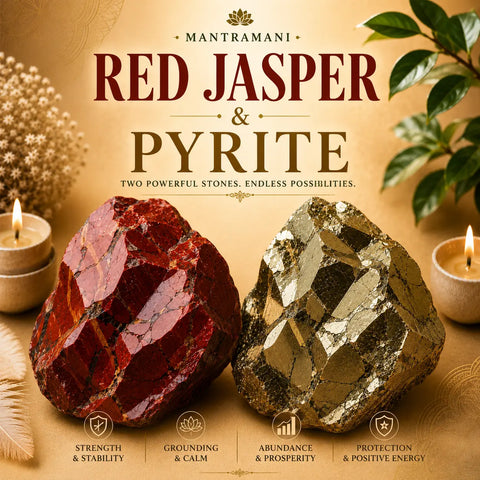
- Red jasper — brick to deep brick-red, coloured by iron oxide. The classic grounding stone and the variety with the Mars association.
- Dalmatian jasper — cream with black spots. Technically not a true jasper at all but a feldspar-rich igneous rock; the black spots are arfvedsonite. Sold and used as jasper by universal convention.
- Mookaite jasper — mustard, burgundy and cream, exclusively from Western Australia. Associated with vitality and decisiveness.
- Picture jasper — brown and tan with landscape-like banding, from ancient sediment layers.
- Ocean jasper — orb-patterned, from a single now-largely-exhausted coastal deposit in Madagascar, which is why good material has become expensive.
- Kambaba jasper — dark green with orb patterns; actually a stromatolite, a fossilised algal structure.
- Bumblebee “jasper” — the vivid yellow-and-black material. It is not jasper, and it contains arsenic and sulphur compounds. Reputable sellers do not put it in bracelets worn against skin, and we do not stock it.
Traditional associations: Vedic, planetary and chakra
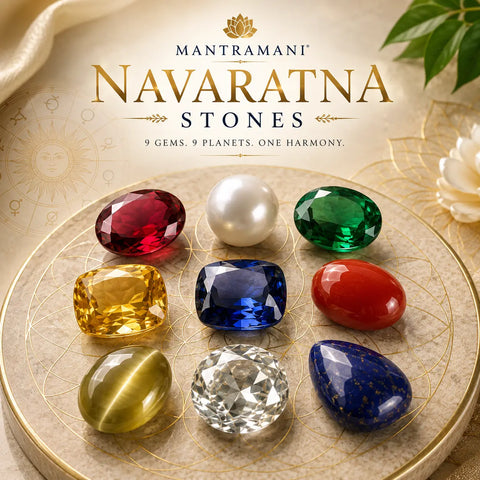
In Vedic gemmology, red stones belong to Mangal (Mars) — the graha of courage, energy, physical drive, competition and property. Red jasper falls into that family by colour, and it appears in the recognised set of substitute stones for moonga, the red coral, which is Mars’s primary navaratna gem. Note that in classical practice the first-named substitute for moonga is usually carnelian (rakt hakik), with red jasper, bloodstone, red agate and red onyx also in the set. Our guides to moonga, the red coral and to gemstones for Mangal dosha cover the classical framework; carnelian covers the closest alternative.
Because jasper is a supportive crystal rather than a navaratna stone, astrologers treat it as low-risk — it does not carry the cautions that surround moonga, which classical practice says can intensify an already strong Mars.
In chakra practice, red jasper sits firmly at the root chakra, Muladhara: the centre of safety, stability and physical presence. The yellow and mustard varieties such as mookaite are usually placed at the solar plexus, Manipura. See chakra healing stones for the full mapping.
Across many older traditions — Egyptian, Mesopotamian, Native American and Indian alike — jasper was carried as a protective amulet and a traveller’s stone. Its nickname in modern crystal work, “the Supreme Nurturer”, reflects that long history of being worn for steadiness rather than for transformation.
What jasper is traditionally worn for
Practitioners regard jasper as the stone of steady endurance. It is traditionally worn for:
- Grounding — the primary association, for people who feel scattered, restless or ungrounded.
- Courage and confidence — red jasper’s Mars link, worn before something that requires nerve.
- Endurance in long effort — traditionally favoured by people facing sustained physical or mental demands, as a stone of persistence rather than a source of energy.
- Protection — one of the oldest amulet stones, and still used that way; see crystals for protection.
- Emotional steadiness — associated with a settled, even temperament rather than intensity.
These are traditional and spiritual associations. Competing pages describe jasper as increasing stamina or reducing fatigue; we do not make physiological claims. Jasper affects no bodily process, and it is not a substitute for medical advice.
Who traditionally wears jasper, by rashi
- Mesha (Aries) and Vrishchika (Scorpio) — both ruled by Mangal, making red jasper the natural fit. Our jasper range includes an Aries rashi bracelet built on exactly that association.
- Simha (Leo) and Dhanu (Sagittarius) are also commonly suggested, since the Sun and Jupiter are traditionally friendly to Mars.
- Anyone advised toward a Mars stone who wants something gentler than moonga, which classical practice treats with more caution.
- Anyone drawn to grounding stones — jasper is a warmer, earthier alternative to black tourmaline or onyx.
- Beginners, since jasper is inexpensive, durable and carries no traditional cautions.
Astrologers usually advise more care for Mithuna (Gemini), Kanya (Virgo), Vrishabha (Taurus) and Tula (Libra) with strong Mars stones, since Mercury and Venus are not considered friendly to Mars — though this applies far more to moonga than to jasper. The Aries and Scorpio guides go deeper by sign.
How to wear and care for jasper
Which hand. Wear jasper on the left wrist for grounding and stability, the receiving side. Wear it on the right when the intention is courage, drive and outward action — the more Mars-aligned use.
When to start. Mars’s day is Tuesday. Astrologers who treat red jasper as a Mars stone suggest first wearing it on a Tuesday morning during Shukla Paksha, after cleansing, with the mantra Om Angarakaya Namah chanted 108 times.
Metal. Gold, copper and panchdhatu are the traditional metals for Mars stones. Copper in particular is strongly associated with Mangal in Indian practice.
In the home. Red jasper pyramids are traditionally placed in the south of a room, the direction associated with Mars in vastu, or in a workspace where sustained effort happens.
Cleansing. Jasper is regarded as a hard-working stone and benefits from regular cleansing — every couple of weeks with normal wear. Moonlight, selenite, sound and smoke all suit it. Brief rinsing is fine, but do not soak it: jasper is more porous than crystalline quartz.
Care. At Mohs 6.5–7 it is durable enough for daily wear. Keep it away from perfume, oils, cosmetics and harsh chemicals, which the porous surface can absorb, and note that strong sunlight over long periods can fade some red jasper. Avoid ultrasonic cleaners on any dyed or fracture-filled material.
Real vs fake jasper: how to identify authentic stone
Jasper is cheap enough that outright faking is less common than with jade or aquamarine — but because it is cheap, the fakes cluster at the bulk-bead end of the market, which is exactly where most bracelets come from.
- Dyed howlite and magnesite. The most common substitution. Both are naturally white with grey veining and take dye readily. They are much softer — Mohs 3–3.5 against jasper’s 6.5–7 — so a steel point will scratch them and will not scratch jasper. Look also for the fine grey web-like veining showing through the dye, which is howlite’s signature.
- Dyed pale jasper. Real but low-grade jasper dyed to a more saleable colour. Check the drill holes on a bead strand: if the interior of the hole is noticeably paler than the surface, the colour is superficial. Rub firmly with a white cloth and a little acetone — properly natural stone will not transfer colour.
- Reconstituted or “impression” jasper. Powdered stone bound with resin and dyed, then sold as jasper. It tends to look unnaturally uniform, feels slightly light for its size, and can smell faintly of plastic when warmed by friction.
- Too-perfect patterning. Genuine jasper is defined by irregular, non-repeating patterns. If every bead on a strand carries an identical pattern, it is moulded or printed material, not stone.
- Colours jasper does not come in. Natural jasper occupies the earth-tone range — reds, browns, mustards, creams, greens, greys. Bright turquoise, neon purple, vivid electric blue “jasper” is dyed, invariably. Be especially wary of “blue jasper” and “purple jasper” at low prices.
- Plastic and resin. Far too light for their size, warm instantly to the touch, and often show a mould seam along the bead.
- Bubbles. Any round bubble means glass or resin.
Every MantraMani jasper piece is natural stone, independently tested by a government-approved, ISO 9001:2015 certified gemmological laboratory, and cleansed and energised with a Vedic ritual before dispatch.
Jasper price in India: what actually drives cost
Jasper is among the most affordable gemstones available, which is a large part of its appeal — it makes an authentic natural stone accessible at bracelet and pendant prices. Jasper bracelets, pendants, rings and pyramids in the Indian market generally sit in the mid-hundreds to low-thousands rupee band. What moves price within it:
- Variety. This is the biggest factor by far. Red jasper and dalmatian jasper are abundant and inexpensive. Ocean jasper commands a substantial premium because the original Madagascar deposit is largely worked out, and fine mookaite and top picture jasper also cost more than common red.
- Pattern quality. Jasper is bought with the eye. A picture jasper with a genuinely landscape-like scene, or an ocean jasper with sharp well-formed orbs, is worth many times a dull piece of the same material. This is the one gemstone family where pattern beats colour.
- Colour saturation and evenness. Deep, even brick-red is worth more than pale or patchy material.
- Polish quality. Jasper takes a fine polish when properly worked. Good lapidary work is a real share of the cost in an inexpensive stone.
- Format and craft. Carved pyramids, hexagon pendants and silver-set rings carry labour and metal cost well above the value of the stone itself. A plain 8mm stretch bracelet is the cheapest format.
- Natural vs dyed. Undyed natural material costs more than dyed. At the very bottom of the market, dyed howlite is often cheaper than real jasper — which is precisely why it is substituted.
Because jasper is inexpensive to begin with, a suspiciously cheap “jasper” bracelet is rarely a bargain on real stone; it is usually dyed howlite or resin. Current prices sit on the jasper collection page.
Frequently asked questions
What are the benefits of red jasper?
In crystal tradition red jasper is regarded as a grounding and endurance stone, traditionally worn for stability, courage, protection and steadiness under sustained effort. In Vedic astrology its red colour associates it with Mangal (Mars). These are traditional beliefs, not proven effects, and jasper is not a treatment for any condition.
Which rashi can wear red jasper?
Primarily Mesha (Aries) and Vrishchika (Scorpio), the Mars-ruled signs. Simha (Leo) and Dhanu (Sagittarius) are also commonly suggested. Because jasper is a supportive crystal rather than a navaratna gem, it carries none of the cautions that surround moonga.
Which hand should I wear a red jasper bracelet on?
The left hand for grounding and stability, the right hand when the intention is courage and outward drive.
Is red jasper a substitute for moonga (red coral)?
Red jasper sits within the recognised set of red substitute stones for moonga, though carnelian (rakt hakik) is usually the first-named substitute in classical practice. Jasper is treated as a gentle supportive option rather than a full remedial replacement.
What are the different types of jasper?
The main ones are red jasper, dalmatian jasper, mookaite, picture jasper, ocean jasper and kambaba jasper. Note that dalmatian jasper and kambaba are not mineralogically true jaspers, and that bumblebee “jasper” is not jasper at all and contains arsenic compounds — we do not stock it.
How do I tell if jasper is dyed or fake?
Check hardness first: jasper resists a steel scratch, while dyed howlite at Mohs 3–3.5 does not. Look inside bead drill holes for a paler interior, which indicates surface dye. Be suspicious of colours jasper does not naturally occur in — bright turquoise, neon purple, electric blue — and of identical repeating patterns across a strand.
Can jasper go in water?
Briefly, yes, but do not soak it. Jasper is more porous than crystalline quartz, so rinse and dry it rather than leaving it submerged, and keep it away from perfume, oils and harsh chemicals.
✨ Stay grounded with MantraMani’s natural jasper — independently tested by a government-approved, ISO 9001:2015 certified gemmological laboratory, cleansed with a Vedic ritual, with free shipping across India. Shop the Jasper collection →
Also explore: Crystals for grounding · Crystals for confidence · Gemstones for Mangal dosha
Written by the MantraMani team — specialists in authentic, AAA-grade natural Vedic gemstones and healing crystals. This guide is for spiritual and informational purposes.
Disclaimer: MantraMani’s gemstones, crystals and rudraksha are spiritual products offered in the Vedic tradition. Benefits described — for wealth, relationships, calm, focus, protection, well-being and similar — reflect traditional beliefs and are not scientifically or medically proven. These products are not a substitute for professional medical, psychological, legal or financial advice, diagnosis or treatment. Individual experiences vary. For any health condition, please consult a qualified professional.