












Real vs Fake Pyrite: How to Check a Pyrite Bracelet Is Original
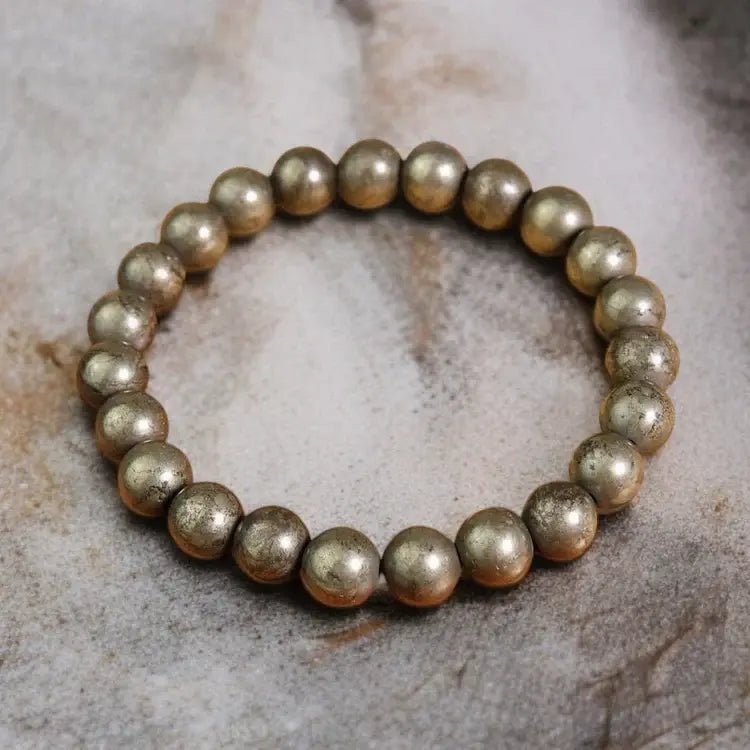
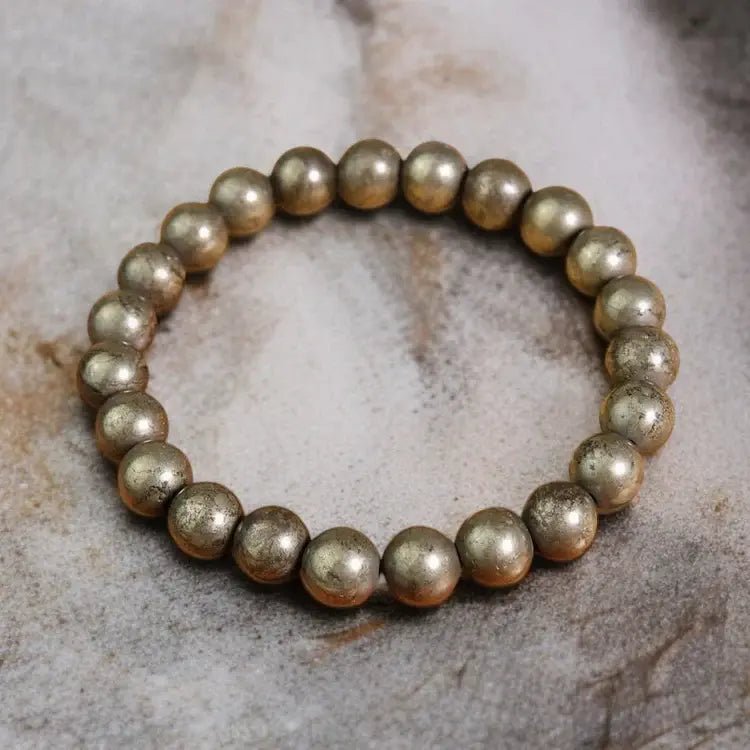
The quickest way to judge real vs fake pyrite is by weight and colour: genuine pyrite is dense and noticeably heavy for its size, a warm metallic brass-gold rather than a bright glittery yellow, often shows natural cubic facets, and can slowly tarnish because it truly contains iron. The most common fake is goldstone — a man-made glass flecked with copper that looks suspiciously sparkly and uniform. This guide walks through the at-home tests that separate authentic pyrite from its lookalikes, the red flags to watch for, and why a lab certificate is the only test that settles the question completely.
Real vs fake pyrite at a glance
| Weight | Real = dense & heavy for its size · fake = light |
| Colour & shine | Real = metallic brass-gold · fake = bright, glittery, uniform |
| Crystal form | Real often shows natural cubic facets · glass fakes never do |
| Tarnish over time | Real can darken/spot (iron) · fake stays flawlessly shiny |
| Streak | Real = greenish-black to brownish-black · goldstone = colourless glass dust |
| Touch | Real = hard & cool · glass warms faster in the hand |
| #1 impostor | Goldstone (man-made glass with copper flecks) |
How to identify real pyrite: seven at-home tests
You don’t need a lab to run a first check. Here is how to identify real pyrite using nothing but your hands, your eyes and good light. No single test is conclusive on its own — but when a stone passes several, confidence is high.
- Weight / density. Pyrite is genuinely dense (its specific gravity is about 5), so a real bead feels heavy for its size. Cup the bracelet in your palm — authentic pyrite has a satisfying heft, while glass, resin and plastic fakes feel disappointingly light.
- Colour. Real pyrite is a muted metallic brass-gold or pale gold with a slightly greyish undertone. If a bead looks like bright, saturated party-glitter gold, be suspicious — that intensity usually means dyed glass, not mineral.
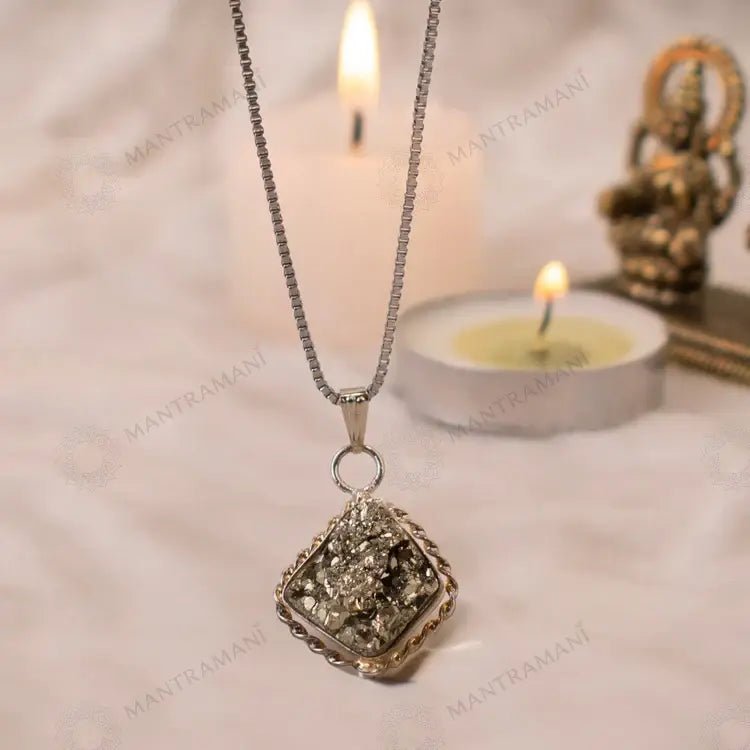
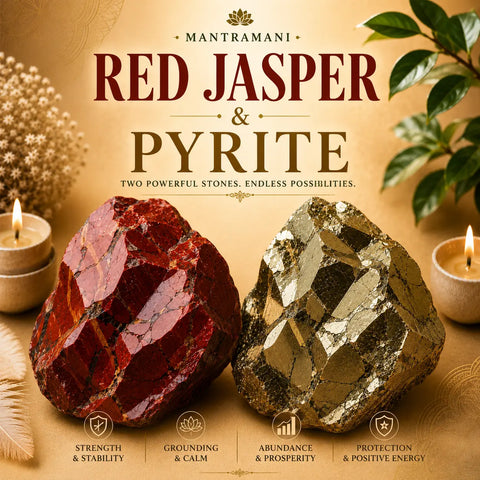
- Cubic crystal form. Pyrite famously grows in natural cubes and pentagonal shapes with sharp, flat faces and fine striations. Raw specimens and rougher beads often keep hints of these facets; perfectly smooth, feature-free “gold” spheres with no crystal character are a warning sign.
- Tarnish over time. Because it holds iron, real pyrite can slowly darken, spot or develop a patina — this is a sign of authenticity, not a defect. A stone that stays showroom-flawless indefinitely is more likely inert glass.
- Streak test. Rubbed on an unglazed porcelain tile, real pyrite leaves a greenish-black to brownish-black streak. Real gold leaves a yellow streak; goldstone glass leaves only colourless dust.
- Hardness. Pyrite is fairly hard (about 6–6.5 on the Mohs scale) — it will lightly scratch glass and resists a steel pin. Something that dents or scratches with a fingernail is not pyrite.
- Temperature / cool touch. Like most genuine minerals and metals, pyrite feels cool when you first pick it up and warms slowly. Plastic and resin imitations feel room-temperature and warm up almost instantly.
If you’re running these checks because you’re wondering is my pyrite real, work through two or three together — heft plus a muted brass colour plus a dark streak is a very reassuring combination.
Pyrite vs goldstone, real gold & chalcopyrite
Most “fakes” aren’t malicious forgeries — they’re other materials mistaken for, or sold as, pyrite. Knowing the three main lookalikes settles the pyrite vs goldstone question and the rarer ones too.
Goldstone (the #1 fake). This is the impostor behind most a fake pyrite bracelet. Goldstone is a man-made glass suspended with tiny copper flecks that catch the light. Tell-tale signs: it’s too bright, too uniform and too sparkly, it’s light in the hand, it never tarnishes, it has no cubic crystal faces, and it often shows a smooth glassy sheen rather than a metallic one. If beads look like glittering amber-gold candy, you’re almost certainly holding goldstone.
Real gold. True gold is far heavier and softer than pyrite, doesn’t tarnish, and leaves a yellow streak (pyrite’s is dark) — which is exactly how prospectors told them apart, earning pyrite its nickname “Fool’s Gold.” Nobody is stringing real gold into affordable bracelets, so in practice this comparison is about understanding pyrite’s history, not spotting a swap.
Chalcopyrite. A genuine copper-iron sulphide mineral, chalcopyrite is softer than pyrite and often shows an iridescent peacock-blue and purple tarnish. It’s sometimes sold as “peacock ore.” It’s a real crystal, just not pyrite — the colourful sheen is the giveaway.
Red flags & why a lab certificate matters
Alongside the tests, a few common-sense red flags flag most fakes before you even handle the stone:
- Too bright & too uniform. A whole strand of identical, dazzling gold beads with zero variation is a manufacturing signature — nature isn’t that consistent.
- Too light. If it doesn’t feel dense, treat it as suspect.
- Suspiciously cheap. If it’s priced like a novelty, it may well be one.
- “Never tarnishes” promises. Real pyrite can patina; marketing that guarantees eternal shine is often describing glass.
- No paperwork. A seller who can’t say whether the stone is natural is the biggest red flag of all.
At-home tests build confidence, but they can’t be truly conclusive — density and colour can be mimicked well enough to fool the eye. That’s why a lab certificate is the surest proof: an independent gemological report confirms the material is natural pyrite, removing the guesswork entirely. For the wear-and-care side of ownership, our pyrite bracelet benefits pillar covers why genuine iron content is exactly what makes real pyrite behave the way it does.
How MantraMani guarantees authentic pyrite
We remove the doubt for you. Every MantraMani pyrite bracelet is lab-certified natural pyrite and Vedically energised (abhimantrit) before it ships, arriving with a Certificate of Authenticity so you never have to run the tests above in anxiety. It’s real iron-sulphide pyrite — dense, brass-gold and honest — not goldstone glass. To explore genuine options, browse the full pyrite collection or our wider wealth & abundance bracelets, and if you’re pairing pyrite with other prosperity stones, see the best crystals for money and wealth in India. Once you know your stone is real, keep it that way — remember pyrite’s iron means it should stay dry and be cleansed with sage or moonlight, never water.
Frequently asked questions
How can I tell if my pyrite is real or fake?
Check weight, colour and form together: real pyrite is dense and heavy for its size, a muted metallic brass-gold, often shows natural cubic facets, leaves a greenish-black to brownish-black streak, and can slowly tarnish. Light, dazzlingly uniform, glittery beads that never dull are usually fake.
What is the difference between pyrite and goldstone?
Goldstone is man-made glass flecked with copper, so it looks too bright, too uniform and sparkly, feels light, has no cubic crystal faces and never tarnishes. Real pyrite is a natural iron-sulphide mineral that is heavy, metallic brass-gold and can develop a patina over time.
Is it bad if my pyrite tarnishes or darkens?
No — light tarnishing is actually a sign of authenticity, because pyrite contains iron and real iron reacts over time. Keep the bracelet dry and away from water and sweat to slow it, and cleanse it with sage smoke or moonlight rather than water.
Do I really need a lab certificate for pyrite?
At-home tests build strong confidence, but only an independent lab certificate conclusively confirms the stone is natural pyrite rather than a convincing lookalike. Every MantraMani pyrite bracelet is lab-certified and ships with a Certificate of Authenticity, so the material is verified for you.
Shop the lab-certified Pyrite bracelet → · Read the full pyrite benefits guide →
MantraMani gemstone & crystal products are spiritual and wellness items, not medical devices, and are not intended to diagnose, treat, cure or prevent any disease.
Shop pyrite at MantraMani
Every piece is lab-certified natural pyrite and energised before dispatch. Browse all 115 in the Pyrite collection.