








How to Identify Original Rudraksha: The Complete Authenticity Guide
To identify an original rudraksha, rely on three things in order: an X-ray or lab certificate confirming the internal seed compartments match the number of faces (mukhi), natural unbroken mukhi lines that run from the top hole to the bottom without any glued or carved joins, and a genuine woody, irregular surface. The popular water “float or sink” test and the copper-coin rotation test are traditional beliefs, not reliable proof. The most dependable check is a lab-verified certificate you can cross-reference. Here is exactly how to tell a real rudraksha from a betel-nut, wood or plastic fake.
What is rudraksha and why fakes are common
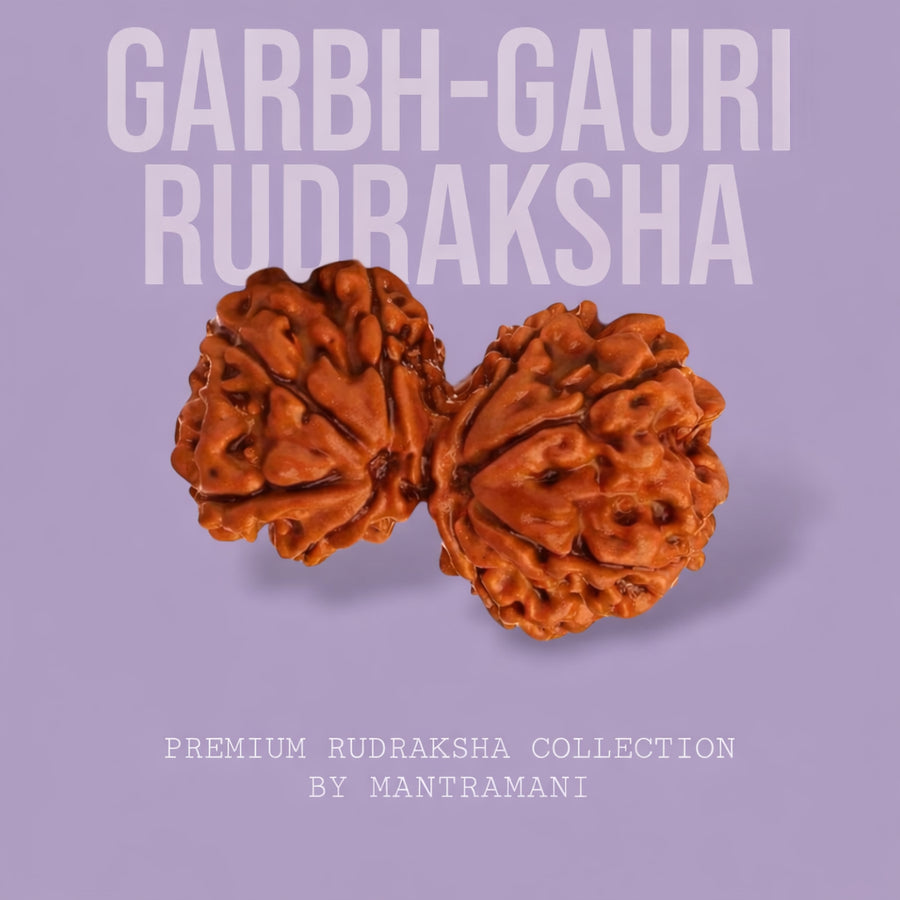
Rudraksha is the dried seed (stone) of the Elaeocarpus ganitrus tree, grown mainly in Indonesia (Java), Nepal and parts of India. The name comes from Sanskrit Rudra (Lord Shiva) and aksha (eye or teardrop) — often translated as “the tears of Shiva.” Each bead has natural clefts or faces called mukhi, from 1 to 21, and each mukhi is traditionally linked to a deity and a planet — the common 5 mukhi, for example, is associated with Jupiter (Guru) and is worn for calm and clarity. Because genuine rare-mukhi beads (1, 14, 21 mukhi) can be very valuable, the market is full of fakes: betel nut (supari) carved with false lines, wooden or plastic beads, and lookalike bhadraksha seeds (Elaeocarpus tuberculatus) passed off as rudraksha.
Rudraksha at a glance
| Attribute | Detail |
|---|---|
| Botanical source | Elaeocarpus ganitrus (seed / stone) |
| Meaning | Rudra (Shiva) + aksha (eye/teardrop) — “tears of Shiva” |
| Deity | Lord Shiva (Rudra) |
| Faces (mukhi) | 1 to 21; 5 mukhi is most common |
| 5 mukhi planet | Jupiter (Guru / Brihaspati) |
| Main origins | Indonesia (Java), Nepal, India |
| Traditionally worn for | Calm, focus, devotion, positive energy |
| Common fakes | Betel nut, wood, plastic, bhadraksha seeds |
| Best verification | X-ray + lab certificate |
7 ways to check if a rudraksha is original
1. Inspect the mukhi lines (the face test)
Genuine mukhi are natural clefts or grooves that run continuously from the top hole to the bottom of the bead. On a real bead they are slightly irregular and part of the seed’s grain. On a fake, carved lines look too even, may stop abruptly, or reveal a filled/glued groove where a false line was cut into a betel nut. Under magnification, a carved line has tool marks; a natural line does not.
2. Examine the surface texture
A real rudraksha has a hard, woody, uneven “mountain and valley” surface with natural tubercles. Plastic beads feel too smooth or too perfectly patterned; wooden fakes lack the dense, knobbly texture. The corn-like natural surface is hard to convincingly fake.
3. The X-ray test (most definitive, non-destructive)
Inside a genuine rudraksha, the number of internal seed compartments (loculi) should equal the number of mukhi lines on the outside. An X-ray reveals this internal structure without cutting the bead — a 5 mukhi bead shows five compartments. This is the gold-standard test that reputable sellers and labs use, and it is the reason an X-ray-tested certificate is worth insisting on, especially for higher-value rare-mukhi beads.
4. The water test — a myth, not proof
Many believe a real rudraksha always sinks in water and a fake floats. This is unreliable: a dense fake can sink, and a genuine dried or older bead can float depending on its density and any oil content. Use the water test only as a weak hint, never as your deciding factor.
5. The copper-coin rotation test (traditional belief)
A well-known folk test places the bead between two copper coins to see if it rotates, attributed to rudraksha’s subtle paramagnetic properties. Results are inconsistent and easily misread, and depend on how you hold it. Treat this as tradition, not scientific verification.
6. The boiling / scratch test (use with caution)
Genuine rudraksha is tough and holds its colour; some fakes made of paste or dyed wood soften, fade or disintegrate when boiled, and dye may come off on a cloth. Because heat and scraping can damage a real bead too, do this only on a bead you already own and suspect — not on a purchase you intend to keep.
7. Certificate & source verification (decisive)
For any bead beyond the everyday 5 mukhi, buy from a seller who provides a lab / X-ray authenticity certificate stating the mukhi count and origin (Java vs Nepal beads differ in size and look). Cross-check any report number, and confirm the certificate describes your specific bead.
Real vs fake rudraksha: quick comparison
| Signal | Original rudraksha | Fake / imitation |
|---|---|---|
| Mukhi lines | Natural, continuous, slightly irregular | Carved, too even, glued or filled joins |
| Surface | Hard, woody, knobbly tubercles | Smooth plastic or plain wood grain |
| Internal structure (X-ray) | Compartments = number of mukhi | Solid, hollow, or wrong count |
| Colour | Natural brown; even, no dye transfer | Painted/dyed; colour rubs off |
| Water/coin tests | Inconclusive — do not rely on them | Can “pass” too — unreliable |
| Paperwork | X-ray/lab certificate available | No certificate or vague claims |
What genuine, energized rudraksha should come with
Beyond authenticity, a wearable rudraksha should be prepared correctly. Look for a seller who confirms:
- Natural, untreated bead with disclosed origin (Indonesian/Java or Nepali).
- X-ray or lab verification of the mukhi count, particularly for rare-mukhi beads.
- Energization (pran-pratishtha / abhimantrit) before dispatch, in keeping with tradition.
- Clear return/verification policy so you can inspect on arrival.
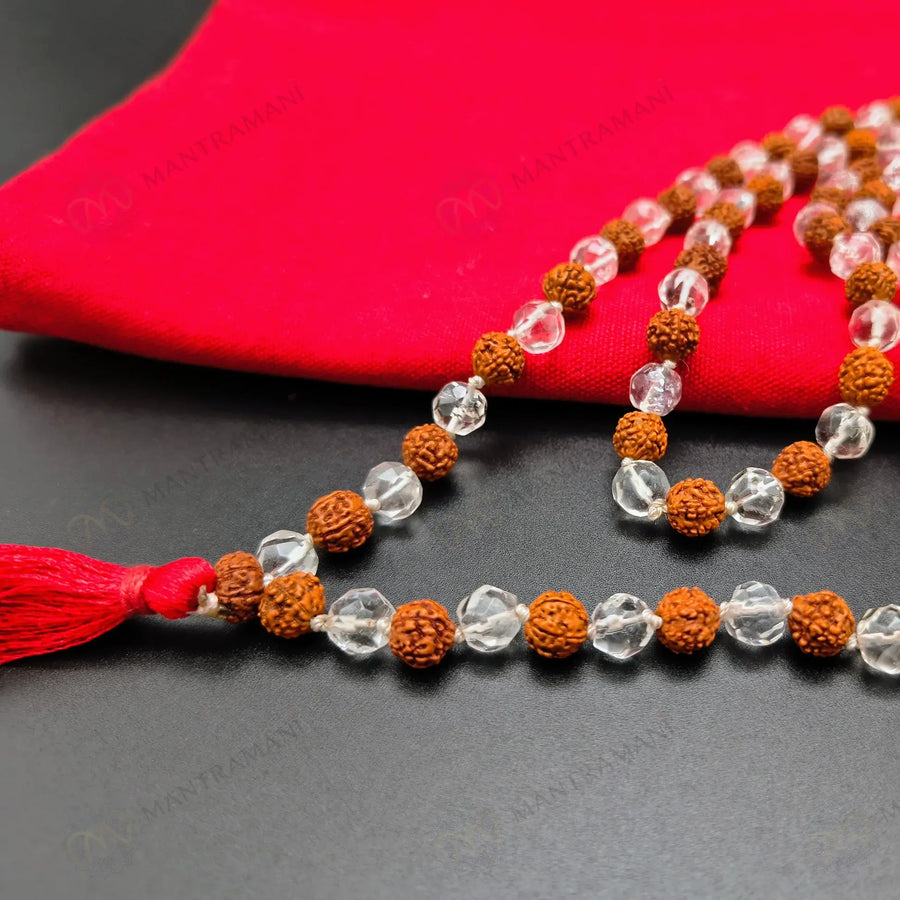
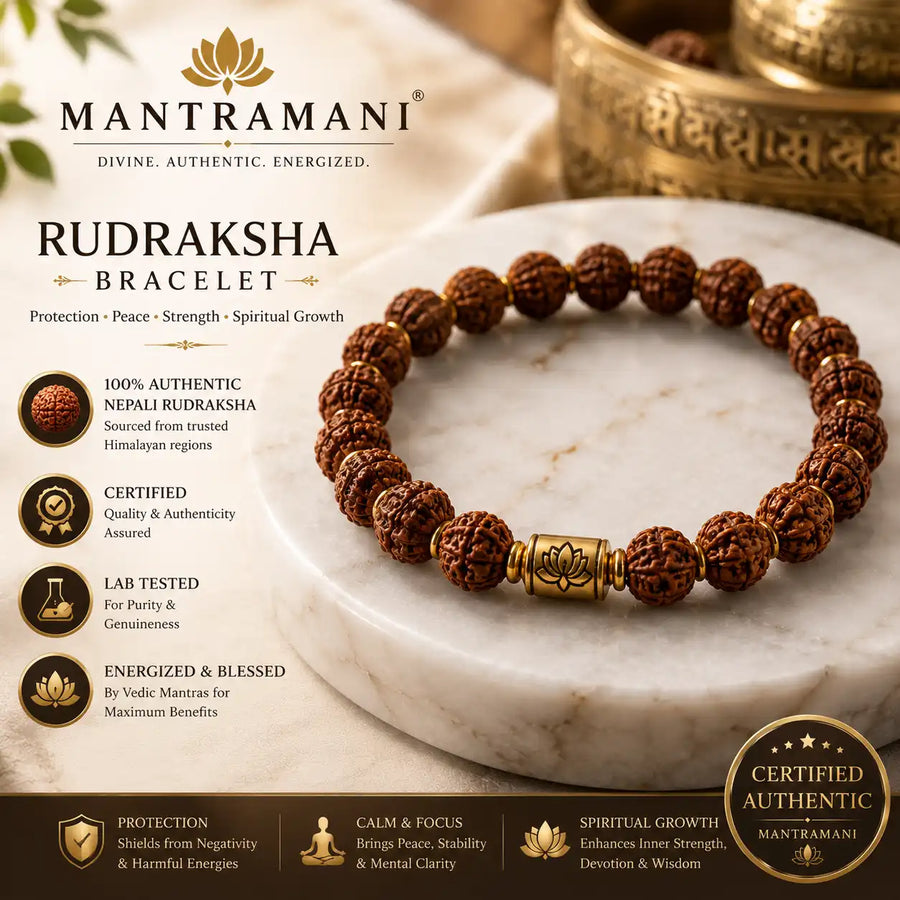
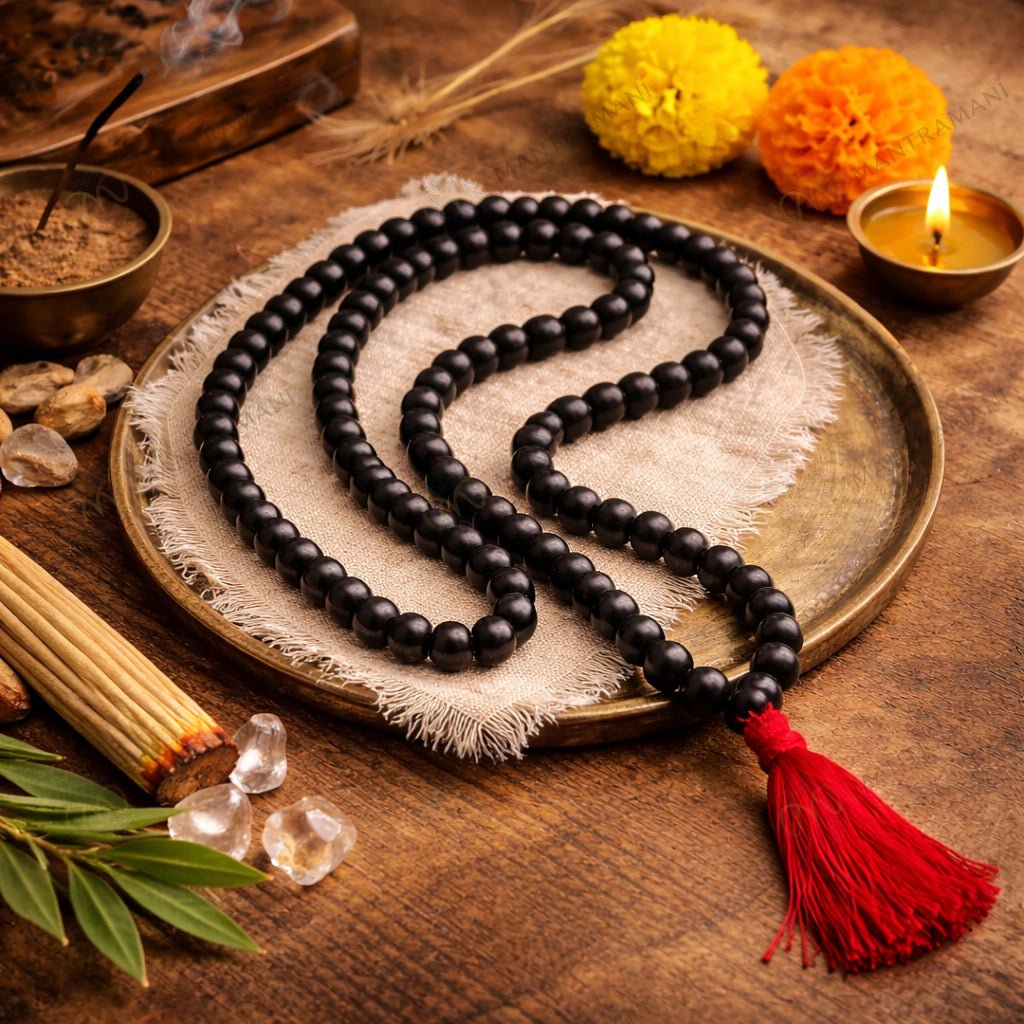
At MantraMani, our lab-certified, energized rudraksha collection is sold as natural beads with authenticity documentation, and you can choose ready-strung options in our mala & japa collection. If you like the sacred-bead form but want a different material, the karungali (ebony) mala range follows the same natural-and-certified standard. Prefer to compare across categories first? Browse the full shop by stone hub.
Buyer checklist before you pay
- Confirm the seller offers an X-ray / lab certificate for the mukhi you’re buying.
- Inspect mukhi lines under magnification for carving or glue.
- Feel the surface texture — woody and knobbly, not smooth plastic.
- Ignore water/coin “tests” as decisive proof.
- Choose natural, energized beads with disclosed origin and a return window.
For the certified-gemstone version of this same trust process, read our sister guide: How to Check if a Pukhraj (Yellow Sapphire) Is Real: 7 Tests + Lab Certification.
Frequently asked questions
What is the most reliable way to check original rudraksha?
An X-ray is the most dependable, non-destructive test: it shows the internal seed compartments, which should equal the number of mukhi faces on the outside. Pair this with a lab certificate and a close look at the natural mukhi lines and surface texture.
Does a real rudraksha sink in water?
Not always. The water “float or sink” test is unreliable — dense fakes can sink and some genuine dried beads can float. Use it only as a weak hint and rely on X-ray or lab verification for a real decision.
How do I spot a fake betel-nut rudraksha?
Fakes carved from betel nut (supari) usually have too-uniform lines, tool marks, or filled grooves where false mukhi were cut in. The surface lacks the hard, knobbly, woody texture of a real seed, and an X-ray will show a solid interior rather than matching compartments.
Which mukhi rudraksha is best for beginners?
The 5 mukhi rudraksha is the most common and widely worn, traditionally associated with Jupiter (Guru) and valued for calm and focus. It is affordable and a safe starting point while you learn the authenticity checks in this guide.
Should rudraksha be energized before wearing?
In tradition, many prefer a rudraksha that has been energized (pran-pratishtha / abhimantrit) before first wear. It is a belief-based ritual rather than a quality test, so still confirm the bead itself is genuine and, ideally, X-ray or lab certified.
Shop lab-certified Rudraksha → · Which gemstone for your rashi? →
Gemstone & astrological guidance reflects traditional Vedic beliefs and is for spiritual/wellness purposes only — it is not medical, legal or financial advice, and MantraMani products are not intended to diagnose, treat, cure or prevent any disease.