





January Birthstone: Garnet — Meaning, Benefits & Who Wears It
Garnet is the birthstone for January — a deep red stone traditionally associated with vitality, courage and sustained effort. It is also one of the most affordable genuinely natural gemstones you can buy, which is unusual for a stone with this much history behind it.
First, a distinction worth making
The birthstone list is a Western calendar-month tradition, standardised commercially in 1912. It is not the same thing as the Vedic system, where a stone is matched to your rashi — your moon sign, calculated from birth date, time and place — and to the planet ruling it.
Neither is wrong. They answer different questions:
| Birthstone | Rashi Ratna | |
|---|---|---|
| Based on | Calendar month of birth | Moon sign, from date + time + place |
| Origin | Western, standardised 1912 | Vedic jyotish |
| Needs a chart? | No | Yes, properly |
| Good for | Gifting — you only need the month | Personal wear on astrological advice |
If you want the Vedic answer, work it out with the Gemstone Finder or read the Rashi Ratan buying guide. If you are buying a gift and only know the birthday, the birthstone list is exactly the right tool.
Garnet: quick facts
| Month | January |
| Mineral | A whole family, not one mineral — almandine, pyrope, spessartine, grossular, andradite |
| Colour | Deep red is standard; garnet also occurs orange, green and colourless |
| Traditionally worn for | Vitality, courage, steady energy, passion |
| Chakra | Root (Muladhara) |
| Planet | Mangal / Mars — used as an accessible stand-in for Moonga |
| Hardness | 6.5–7.5 — durable enough for daily wear |
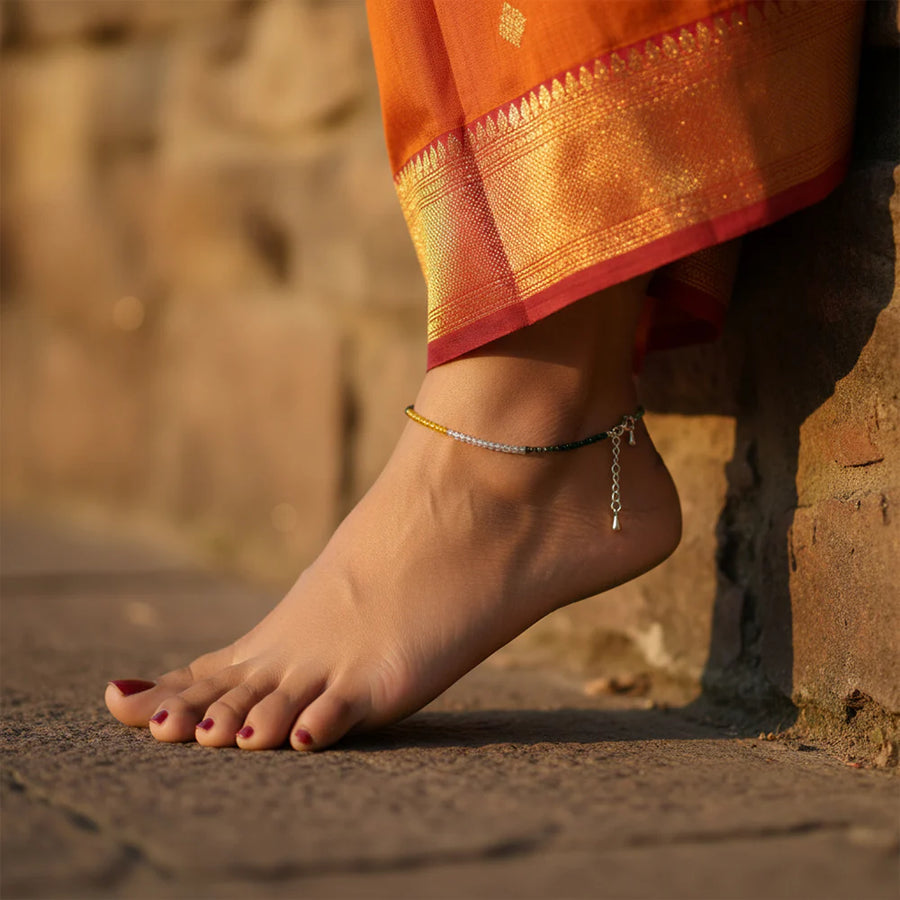
| Typical price | ₹499–₹749 for an anklet, ₹679 for a pyramid |
What garnet is traditionally worn for
- Vitality and stamina. The core association, and the reason it is grouped with Mars. Garnet is traditionally the stone for work that requires you to keep going rather than to start fast.
- Courage. It has been carried by travellers and soldiers across several cultures — the association with safe return is very old.
- Passion and commitment. In relationship terms garnet is traditionally the stone of steady devotion rather than new attraction. That is rose quartz’s territory.
Full detail in garnet benefits: passion, vitality and how to wear.
Who traditionally wears garnet
Anyone born in January, under the Western convention — which covers most of Makar (Capricorn) and the start of Kumbh (Aquarius).
In the Vedic frame garnet is treated as a Mars stone, so it is also commonly worn by Mesh (Aries) and Vrishchik (Scorpio) natives who want the Mars association without the cost of certified Moonga. It carries no traditional restriction — unlike Neelam, it does not require a chart reading first.
The garnet family
“Garnet” is a group of related minerals, which is why prices vary so widely.
| Type | Colour | Note |
|---|---|---|
| Almandine | Deep red to brownish red | The common one; most red garnet jewellery |
| Pyrope | Bright blood red | The classic “Bohemian garnet” |
| Spessartine | Orange to mandarin | Less common, more expensive |
| Grossular (incl. hessonite) | Green, honey, cinnamon | Hessonite is Gomed — a navratna, the Rahu stone |
| Demantoid | Green | Rare and genuinely costly |
Worth knowing: Gomed is a garnet. Hessonite belongs to the same mineral family, which surprises people who think of garnet as a cheap semi-precious stone and Gomed as a serious jyotish ratna. Both are true.
Real vs fake garnet
Garnet is inexpensive enough that faking it is barely worthwhile, so the risk is lower than with turquoise or tiger eye. Two things still come up:
- Red glass. Look for bubbles under a torch, and for a mould seam on beads. Glass also warms in the hand faster than stone does.
- Dyed quartz. Uniform colour with no variation between beads, and colour that lifts onto a cotton bud with acetone.
Genuine garnet shows depth — it looks darker in shadow and lights up under a direct beam. Flat, evenly coloured red across every bead is the warning sign, as it is with almost every stone.
How to wear garnet
- Metal: gold or copper for the Mars association; silver for ordinary wear.
- Day: traditionally first worn on a Tuesday.
- Hand: left wrist to receive, right to project — the convention is set out in how to wear a pyrite bracelet.
- Care: straightforward. Garnet is hard, does not fade in sun and tolerates water. Avoid ultrasonic cleaners on stones with visible inclusions.
Browse the garnet range or the January birthstone collection.
Frequently asked questions
Is garnet the only January birthstone?
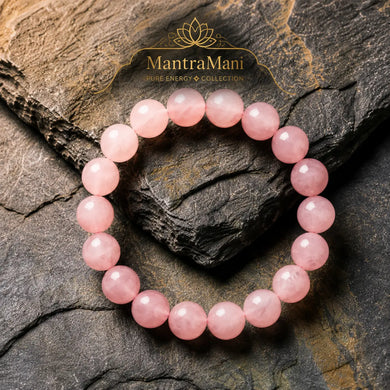
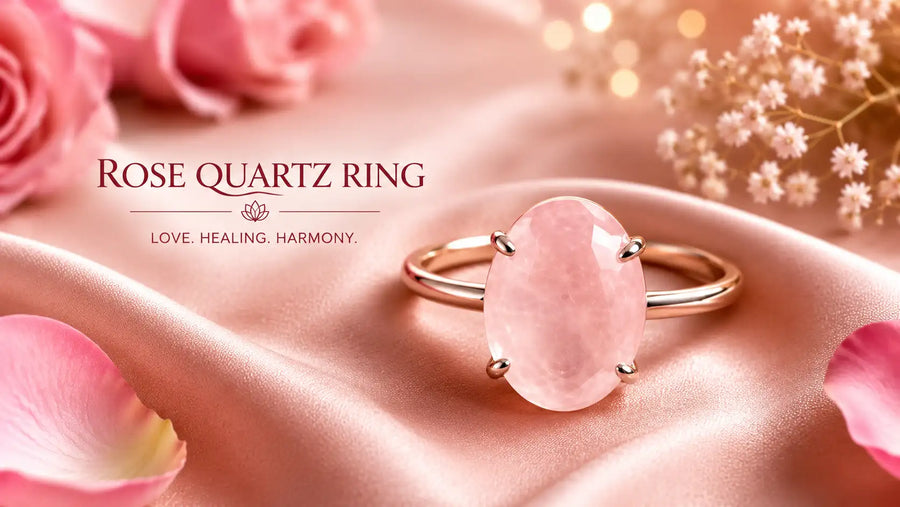
In the standard list, yes. Some modern lists add rose quartz as an alternative.
Can I wear garnet if I was not born in January?
Yes. The birthstone list is a gifting convention, not a restriction. In Vedic terms garnet is a Mars stone and is worn on that basis regardless of birth month.
Is garnet the same as ruby?
No. Ruby is corundum, far harder, far rarer and far more expensive, and it is the Sun’s navratna. Red garnet is often sold to look like ruby — see the Manik guide.
Is Gomed a garnet?
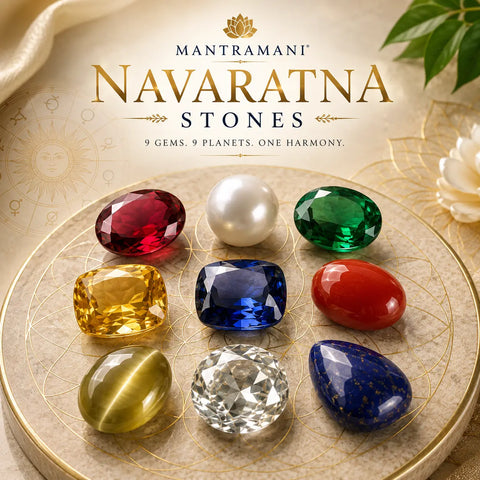
Yes — hessonite garnet. It is the Rahu stone and one of the nine navratna.
What does garnet cost in India?
Semi-precious garnet jewellery runs roughly ₹499–₹749 at MantraMani. Certified loose garnet for astrological wear costs considerably more and is graded individually.
Related reading
- Garnet benefits: passion, vitality and how to wear
- Gomed (Hessonite): benefits, effects and price
- Rashi Ratan buying guide 2026
- Carnelian benefits: confidence, creativity and how to wear
Written by Dr. Padmaja Shastri, in-house Vedic astrologer at MantraMani.
Gemstones and crystals are worn in Vedic and folk tradition as objects of faith. Nothing here is a medical, financial or outcome-based claim. See our disclaimers.