











Turquoise (Firoza) Benefits, Who Can Wear It & Real vs Fake
Turquoise — firoza in India, and one of the oldest ornamental stones in continuous human use — is worn in Vedic tradition as a stone of communication and protection. It is also, bluntly, one of the most heavily imitated stones on the Indian market. Most of what is sold as cheap firoza is dyed howlite or magnesite. Here is what the stone actually is, who traditionally wears it, and how to tell the difference.
Turquoise: quick facts
| Also called | Firoza, Feroza, Turquoise, Peroja |
| Mineral | Hydrated copper aluminium phosphate — a genuinely soft stone (Mohs 5–6) |
| Traditionally worn for | Clear communication, protection from nazar, steadiness while travelling |
| Chakra | Throat (Vishuddha) |
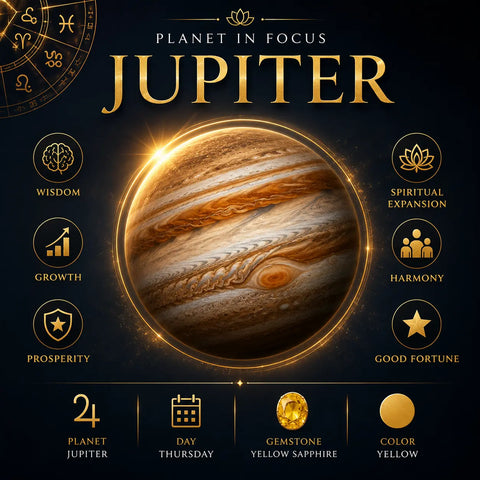
| Planet | Guru / Jupiter — treated in Vedic practice as an upratna (substitute stone) for Pukhraj |
| Rashis traditionally linked | Dhanu (Sagittarius) and Meen (Pisces) |
| Typical price, bracelet | ₹749–₹899 |
What firoza is traditionally associated with
Three associations recur across both Vedic and folk practice:
- Speech and self-expression. Firoza is a throat-chakra stone, and is traditionally worn by people who speak, teach or negotiate for a living. It sits in the same family as lapis lazuli and sodalite for this reason.
- Protection, particularly while travelling. The old belief across Persia, Tibet and India is that firoza takes on harm meant for the wearer — which is why a stone that cracks or dulls is traditionally said to have done its work rather than to have failed. Whether you read that as folklore or as the stone simply being soft and porous, the custom is the same: it is worn, not stored.
- Nazar. Firoza is one of the standard stones for evil-eye protection alongside black tourmaline. See our guide to crystals for protection and negative energy.
Who can wear firoza
Because it is treated as an upratna for Jupiter, firoza is traditionally recommended to the Jupiter-ruled rashis — Dhanu (Sagittarius) and Meen (Pisces). It is also commonly worn by those advised Pukhraj who cannot reach the cost of a certified yellow sapphire, which is the main practical reason it is so widely sold.
Unlike Neelam, firoza carries no traditional warning attached to it. It is generally considered safe to wear without a chart reading, which is why it is a common first stone. If you want the sign-based recommendation worked out properly, the Gemstone Finder does it from your birth details.
Real vs fake firoza: what is actually being sold
This is where most buyers lose money. Four different things are sold as firoza in India:
| What it is | How it is sold | Tell |
|---|---|---|
| Natural turquoise | “Irani firoza”, “Tibetan firoza” | Uneven colour, visible brown or black matrix veining, slight variation bead to bead |
| Stabilised turquoise | Usually just “turquoise” | Genuine stone, resin-hardened because turquoise is soft. Legitimate — but it should be disclosed |
| Dyed howlite | Sold as firoza at ₹150–₹400 | The big one. Howlite is naturally white with grey veins; dyed blue it looks convincing. Veins are grey-to-black and too regular; colour is flat and identical across every bead |
| Dyed magnesite / reconstituted block | “Turquoise”, no qualifier | Powdered stone bound with resin. Uniform colour, no matrix, unnaturally light |
Three checks you can do yourself
- Look at the variation. Natural turquoise is never perfectly uniform. If every bead on a bracelet is the identical shade of blue with the identical vein pattern, it is dyed.
- The acetone test. A cotton bud with nail-polish remover, rubbed on an inconspicuous spot. Dye lifts onto the cotton; natural colour does not. This will not detect stabilisation, only dye.
- Check the price against reality. A genuine turquoise bracelet does not cost ₹199. Natural firoza bracelets sit around ₹749–₹899; a certified loose stone runs into five figures. Anything far below that band is howlite.
None of these three is conclusive. They narrow it down; a laboratory report settles it. Our fuller method is in genuine vs fake: how to verify a gemstone.
What firoza costs in India
| Form | Typical MantraMani price |
|---|---|
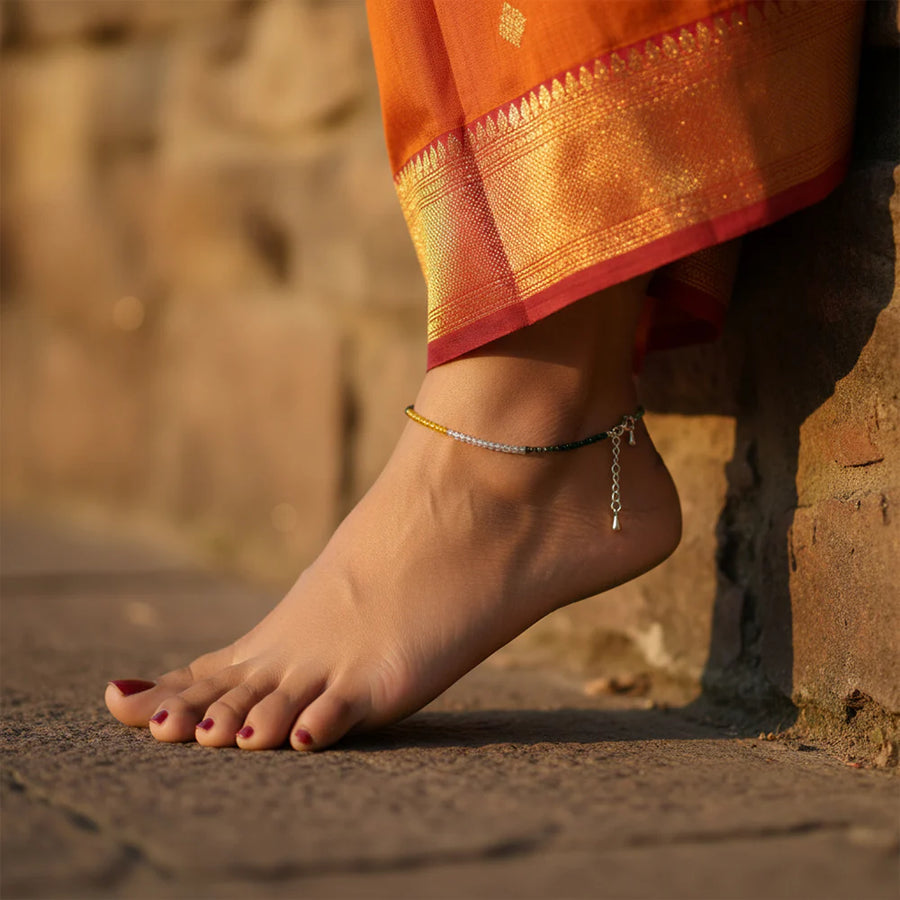
| Turquoise anklet | ₹749–₹849 |
| Irani firoza bracelet | ₹899 |
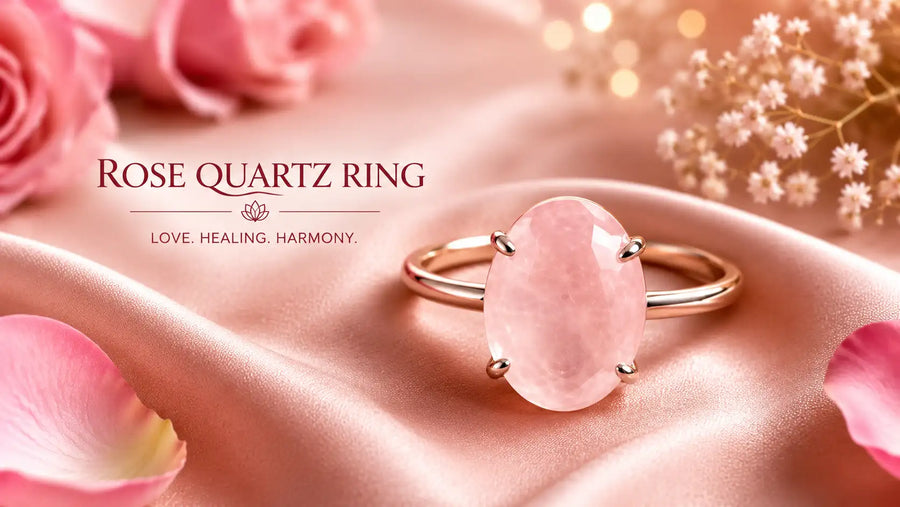
| Turquoise ring, silver-set | ₹2,199 |
| Certified loose firoza gemstone | ₹14,499 |
The spread between a bracelet and a certified loose stone is not a markup — they are different products. Bracelet beads are cut from lower-grade material; a loose stone bought for astrological wear is single, graded, and comes with a report from an independent, government-approved, ISO 9001:2015 certified gemmological laboratory. See the full turquoise collection.
How to wear firoza
- Metal: traditionally gold or panchdhatu for Jupiter stones; silver is common for everyday wear.
- Finger: index finger, if worn as a ring, following the Jupiter convention.
- Day: traditionally first worn on a Thursday, Jupiter’s day.
- Care: this matters more with firoza than with most stones. It is soft and porous. Keep it away from perfume, hand sanitiser, chlorinated water and household cleaners — all of them will discolour it permanently. Wipe with a dry cloth, never soak.
Frequently asked questions
Is firoza the same as turquoise?
Yes. Firoza is simply the name used across India, Iran and much of West Asia for the same mineral.
My firoza has cracked. Should I replace it?
Physically, cracking is normal — the stone is soft and absorbs oils and moisture over time. Traditionally it is read as the stone having absorbed something on the wearer’s behalf, and it is replaced rather than repaired.
Can I wear firoza with other stones?
Generally yes; it is not one of the stones traditionally kept apart from others. The usual caution applies to combining strong planetary stones — particularly Neelam with Manik or Moti.
Is “Tibetan turquoise” genuine?
Sometimes. It is a description of appearance — greener, with heavy dark matrix — rather than of origin, and a great deal of what carries the label is dyed howlite. Judge it on the tests above, not the name.
What if the stone I buy turns out not to be turquoise?
Then our 10X guarantee applies: prove it through an independent NABL-accredited laboratory within 30 days and we refund ten times what you paid. Full terms and exclusions are on that page.
Related reading
- Crystals for protection and removing negative energy
- Which chakra is blocked? Stones for each of the seven
- Pukhraj (Yellow Sapphire): benefits, who should wear and price
- Lapis lazuli benefits: truth, wisdom and how to wear
Written by the MantraMani Gemstone Desk — our in-house sourcing and authentication team. Any astrological guidance here is reviewed by Dr. Padmaja Shastri, our in-house Vedic astrologer.
Gemstones and crystals are worn in Vedic and folk tradition as objects of faith. Nothing here is a medical, financial or outcome-based claim. See our disclaimers.