














Crystal Tree: Benefits, Which Stone to Choose & Where to Place It
A crystal tree — wire branches set with chips of a single stone, on a base — is one of the few crystal objects that is placed rather than worn. That single difference changes everything about how it is chosen. You are not matching it to your rashi. You are matching it to a room and a direction.
This guide covers which stone tree suits which intention, exactly where each is traditionally placed, and what they actually cost.
What a crystal tree is for
The form is old — the wish-fulfilling tree, the kalpavriksha, appears across Indian, Chinese and Persian tradition. The modern object is simpler than the mythology: a fixed point in a room that holds an intention, and that everyone in the household walks past.
That is genuinely the practical argument for one over a bracelet. A bracelet is personal. A tree sits in the shared part of the home, which is why they are the standard Dhanteras and Diwali purchase for a family rather than an individual.
Which stone tree, for which intention
| Tree | Traditionally kept for | Typical price |
|---|---|---|
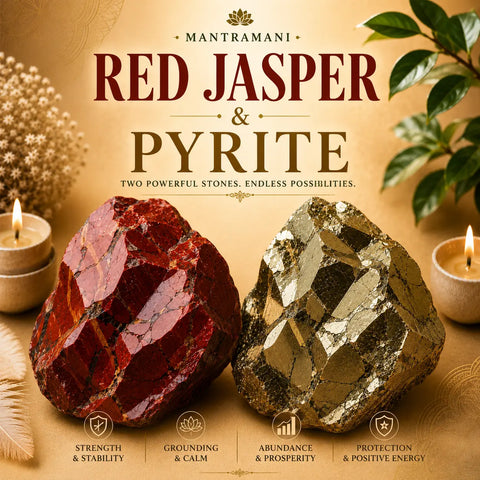
| Pyrite (money magnet) | Wealth and prosperity — the most common choice, and the traditional Dhanteras one | ₹1,499 |
| Green aventurine | Steady growth and opportunity, rather than sudden gain | ₹1,249 |
| Tiger eye | Confidence, courage, focus — commonly kept in a study or office | ₹1,249 |
| Lapis lazuli | Wisdom, communication — kept where work or study happens | ₹1,649 |
| Evil eye | Protection from nazar — traditionally kept near the entrance | ₹889 |
See the full range in the gemstone trees collection.
Where to place a crystal tree
Vastu is specific about direction, and this is the part that is worth following properly since the object gets placed once and then left for years.
| Direction | Traditionally associated with | Tree usually placed there |
|---|---|---|
| North | Kubera, keeper of wealth | Pyrite or green aventurine. The default for a wealth tree. |
| South-East (Agni) | Fire and energy | Citrine or pyrite. The second choice for wealth pieces. |
| North-East (Ishaan) | Clarity and prayer | Clear quartz or amethyst. Kept sparse — this corner is traditionally uncluttered. |
| East | Growth, new beginnings | Green aventurine, jade |
| Entrance | Threshold, what comes in | Evil eye or black tourmaline |
Four placement conventions
- Keep it off the floor. Wealth pieces are traditionally placed on a shelf, table or altar — never at ground level.
- Not in the bathroom, not facing one. The standard Vastu caution, and the most commonly broken.
- Not in the bedroom, for wealth trees. Bedrooms traditionally take calming stones — amethyst, rose quartz — not active ones.
- Where it is seen. A tree in a cupboard does nothing, in any tradition. The point of the object is that it is passed daily.
Trees, pyramids and frames: which to buy
| Best for | Where it goes | |
|---|---|---|
| Tree | A living room or shared space; the most decorative option | North, on a surface |
| Pyramid | A desk, cash box or shop counter; compact and directional | North or south-east |
| Frame | Wall placement; a puja room or entrance | North-east or entrance |
All three sit under Vaastu items if you want to browse the category as a whole.
How to care for a crystal tree
- Dust it. Genuinely the main thing. A dry brush or a soft cloth; the chips are wired on and will loosen if handled roughly.
- Do not wash it. The wire is base metal and the base is often resin or agate. Water gets into the wire wraps and corrodes them. Pyrite in particular rusts — never wet a pyrite tree.
- Cleanse it dry. Incense smoke, sound, or a few hours near a selenite plate. Not salt water, and not sunlight for long periods — amethyst and rose quartz both fade.
- Reset it at festivals. The traditional times to clean and re-place are Chhoti Diwali and the start of Navratri.
Real vs fake: what to look at
Trees are less faked than bracelets, because the chips are cheap enough that imitation is barely worth it. Two things are still worth checking:
- Dyed chips. The same problem as bracelets — uniform, saturated colour with no variation between chips means dye. Real stone chips vary.
- Glass in place of stone. Look for bubbles and for chips that are all the same shape. Natural chips are irregular.
Every MantraMani order ships with a report from an independent, government-approved, ISO 9001:2015 certified gemmological laboratory, and the 10X guarantee covers it: prove a stone is not what we said it was, through an independent NABL-accredited laboratory within 30 days, and we refund ten times what you paid.
Frequently asked questions
How many crystal trees should a home have?
One per intention is the usual convention — a wealth tree in the north, a protection piece at the entrance. Crowding several wealth pieces into one corner is not traditional practice.
Which direction is best for a money tree?
North, which is associated with Kubera. South-east is the traditional second choice.
Can I gift a crystal tree?
Yes — it is one of the more common Diwali and housewarming gifts, precisely because it belongs to a household rather than a person. No rashi matching is needed.
Does a crystal tree need to be energised?
There is no formal requirement. The common practice is to rinse the base, place it in its direction, and light a diya beside it the first time — usually done on Dhanteras or the first day of Navratri.
My pyrite tree has darkened. Is it fake?
Almost certainly the opposite. Pyrite is iron sulphide and it tarnishes with humidity — a real one darkens over the years. Keep it dry and dust it.
Related reading
- Pyrite bracelet benefits: how to wear, which hand and real vs fake
- Best crystals and bracelets for money and wealth in India
- Diwali 2026 crystals: Lakshmi, the five days and where to place them
- Green aventurine benefits: the luck and opportunity stone
Written by the MantraMani Gemstone Desk — our in-house sourcing and authentication team. Any astrological guidance here is reviewed by Dr. Padmaja Shastri, our in-house Vedic astrologer.
Gemstones and crystals are worn in Vedic and folk tradition as objects of faith. Nothing here is a medical, financial or outcome-based claim. See our disclaimers.