















Nazar Dosha: Evil Eye Remedies & Protective Stones
Nazar — drishti in the south, the evil eye in English — is the most widely observed folk belief in India, kept in households that follow very little else. It is worth being precise about what it is.
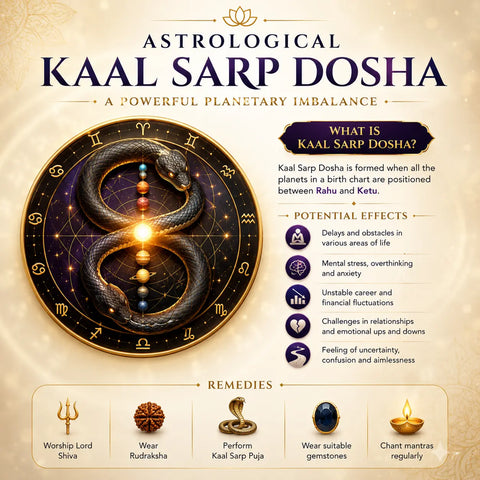
Nazar is not a classical dosha. It does not appear in the jyotish texts alongside Mangal, Shani or Kaal Sarp, and it is not read from a birth chart. It is folk practice — older and more widespread than the astrological system, and belonging to a different tradition entirely. Anyone offering to diagnose “Nazar Dosha” from your chart is blending two things that do not combine.
What the belief holds
That admiration or envy, even unintended, can attach to a person, a child, a business or a new possession — and that the remedy is to deflect attention rather than to confront anyone. Hence the customs: a black dot on a baby, a lemon-and-chilli string over a shop door, something deliberately imperfect on a new house.
The household remedies
These are the tradition proper, and none of them requires buying anything from us.
- Kala tika — a black dot of kajal behind a child’s ear or on the cheek.
- Nimbu-mirchi — lemon and seven chillies hung at a shop or house entrance, replaced weekly.
- Salt or mustard-seed aarti — circled over the person and discarded outside.
- Camphor or dhoop through the house at dusk.
- Deliberate imperfection — the black mark on a new vehicle, the odd tile in a new build. The logic is that nothing flawless attracts envy.
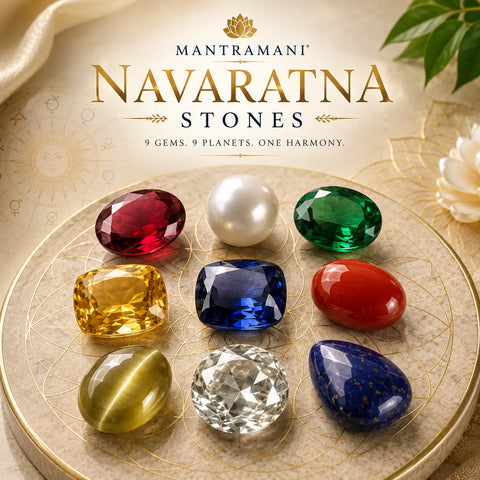
The stones traditionally worn
| Stone | Note |
|---|---|
| Evil eye | The blue nazar bead — Turkish in origin, now thoroughly Indian. ₹299 upward |
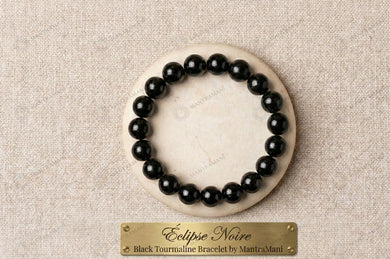
| Black Tourmaline | The standard protective stone in modern practice |
| Turquoise (Firoza) | Traditionally said to take on harm meant for the wearer — which is why a cracked firoza is read as having worked |
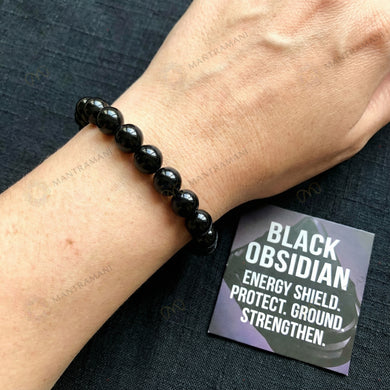
| Obsidian | Clearing; the blunt option |
| Karungali | The South Indian protective wood, commonly given to children |
| Sulemani Hakik | Black-and-white banded agate; a long-standing Indian nazar stone |
See the nazar collection and protection range.
For the home and the shop
Placed objects rather than worn ones: an evil eye tree at ₹889 near the entrance, or a black tourmaline pyramid at ₹499. See crystals for the home.
There is no shipping charge and no minimum order value. Cash on delivery adds ₹49; paying in advance takes a flat 5% off.
An honest line
Nazar is a belief about attention and envy, and the customs around it are genuinely old. What it is not is a diagnosis. If something in your life is going wrong — health, money, a relationship — treating it as nazar risks skipping the actual cause. Buy the bead because it is customary and you like it, not because someone told you it explains a difficulty.
Frequently asked questions
Is nazar the same as black magic?
No. Nazar is unintentional — envy or admiration without malice. The two are frequently conflated by people selling remedies for both.
Why did my evil eye bracelet break?
Tradition reads a broken nazar piece as having done its work. Practically, elastic wears out in six to twelve months.
Can babies wear nazar protection?
It is one of the most common Indian customs. Use a placed object or a tied thread rather than loose beads for anyone very young.
Is nazar in the Vedic texts?
Not as a chart-read dosha. It is folk tradition, and older and more widespread than jyotish.
Related reading
- Evil eye bracelet: meaning, benefits and who should wear it
- Crystals for protection and removing negative energy
- Karungali (ebony) benefits
- Kaal Sarp dosha: gemstone and remedy guide
Written by Dr. Padmaja Shastri, in-house Vedic astrologer at MantraMani.
Astrological readings and gemstones are matters of faith and tradition. Nothing here is a medical, financial or outcome-based claim, and none of it is a substitute for professional advice. See our disclaimers.