














Ganesh Chaturthi 2026 (14 Sep): Stones & a Simple Home Ritual
Ganesh Chaturthi 2026 falls on Monday, 14 September, and runs ten days to Anant Chaturdashi and the visarjan. It is the festival of beginnings — Ganpati is invoked before anything is started, which is why it opens the festival season that runs on through Navratri and Dhanteras.
A note on scope. This is a guide to what is traditionally kept and a simple household practice. It is not a substitute for how your own family observes the festival, and none of it requires buying anything.
Ganesh Chaturthi 2026: the dates
| Ganesh Chaturthi | Monday, 14 September 2026 |
| Duration | Ten days, to Anant Chaturdashi |
| Also called | Vinayaka Chaturthi, Ganeshotsav |
| Ruling graha | Ketu — Ganpati is traditionally associated with Ketu in jyotish |
| Colours | Red, saffron, yellow |
| Offerings | Modak, durva grass, red hibiscus, sindoor |
Sthapana muhurat is calculated from local midday and shifts by city. Check a panchang for your own city nearer the date rather than following a single national timing.
Why beginnings
Ganpati is Vighnaharta — the remover of obstacles — and by convention the first deity invoked in any undertaking. That is the whole logic of the festival’s placement: it clears the way before the buying and gifting season that follows.
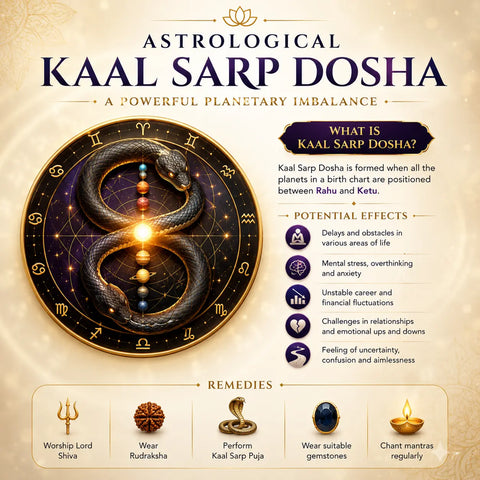
In jyotish Ganpati is associated with Ketu, which is why those advised Ketu remedies are often pointed toward Ganesh worship. See Rahu and Ketu dosha remedies.
Stones traditionally associated with beginnings
There is no classical “Ganesh Chaturthi stone” in the way there is a rashi ratna — anyone who tells you otherwise is improvising. What tradition does associate with the festival’s themes are these:
| Stone | Traditionally kept for |
|---|---|
| Clear Quartz | The neutral stone of clarity — kept beside the murti during the ten days |
| Carnelian | Red-orange, the festival’s colours; associated with beginning things |
| Citrine | Kept where a new venture or business is run from |
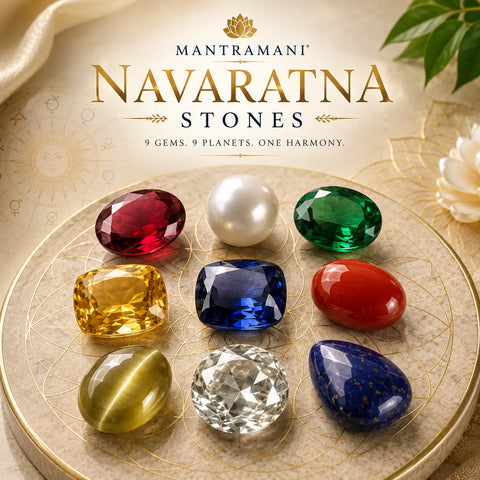
| Gomed (Hessonite) | The Ketu-adjacent navratna, for those advised it — on a reading, not by default |
| Cat’s Eye (Lehsunia) | The classical Ketu ratna. Same caution: worn on advice |
If you are starting something — a business, a course, a move — the conventional choices are clear quartz for the desk and a pyramid or yantra for the room. We keep a business collection for exactly this window.
A simple ten-day home ritual
This needs no priest and nothing you do not already have.
- Day 1, morning. Clean the space first — that is the actual tradition, and it matters more than anything bought. Install the murti facing east or north-east.
- Place, do not crowd. If you keep a crystal, one piece beside the murti is the convention. A shelf of stones is a modern retail idea, not a traditional one.
- Each day. Light a diya, offer durva grass and whatever your family offers. Twenty-one durva blades is the traditional count.
- Modak on day one. Twenty-one is again the customary number.
- Anant Chaturdashi. Visarjan. Clay murtis are immersed; crystals are not — rinse, dry and keep them. This is the single most common confusion, and immersing a bought stone is not tradition, it is waste.
The mantra
The most widely used, and the one most people already know:
ॐ गं गणपतये नमः
Om Gam Ganapataye Namah
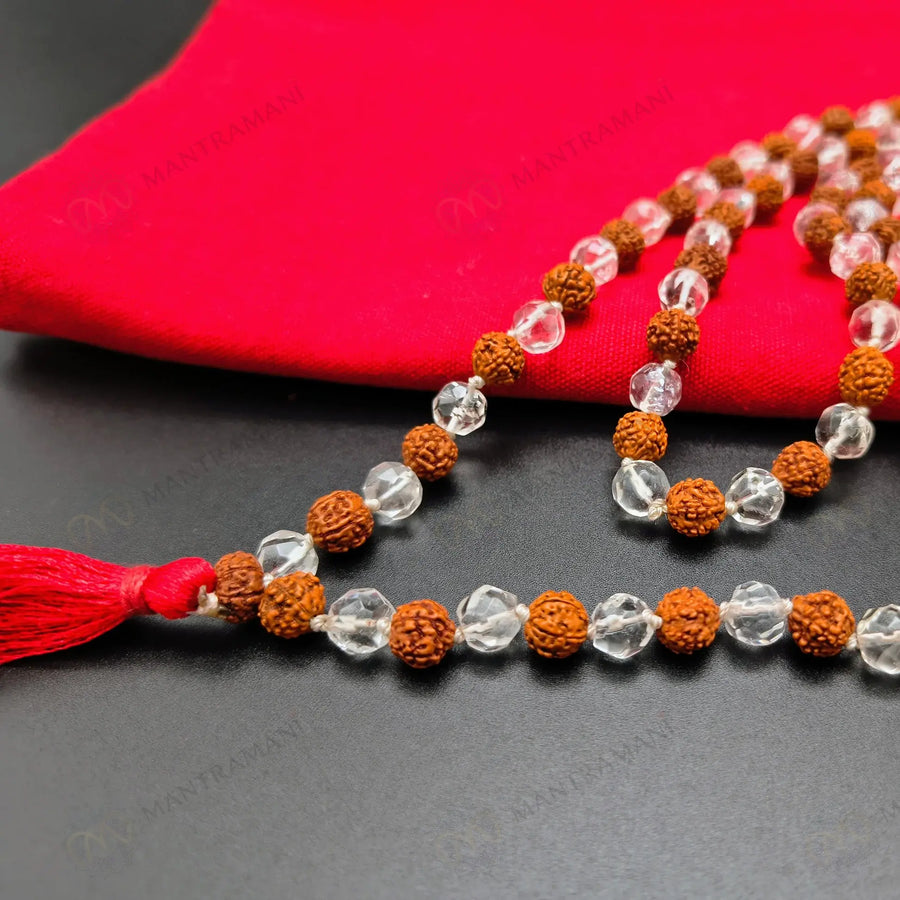
Traditionally chanted 108 times. The longer Vakratunda Mahakaya shloka is the other common household choice. Neither requires a stone, and a mala of any material will do for counting — see our japa malas.
An honest note on eco-friendly murtis
Plaster-of-Paris murtis with chemical paint do not dissolve and are a documented problem for the water bodies they are immersed in. Clay (shadu mati) murtis are the traditional material, and several cities now restrict PoP outright. This has nothing to sell attached to it — we do not make murtis — but it is the single most useful thing to know about the festival.
What comes next in the calendar
Worth planning around, because two of the next three windows point in opposite directions:
- Pitru Paksha, 26 September to 10 October — jewellery and auspicious items are traditionally not bought during these fifteen days.
- Navratri, from 11 October — the buying season reopens.
- Dhanteras, Saturday 7 November — the peak.
Frequently asked questions
Can I buy a gemstone on Ganesh Chaturthi?
Yes. It is traditionally an auspicious day for beginnings, and there is no restriction on purchases. The restriction falls later, during Pitru Paksha.
Should crystals be immersed at visarjan?
No. Only the clay murti is immersed. Crystals are rinsed, dried and kept.
Which direction should the murti face?
East or north-east is the usual convention, with the murti facing into the home rather than out of the door.
Do I need to keep Ganpati for the full ten days?
No. Households keep the murti for one and a half, three, five, seven or ten days depending on family custom. All are traditional.
Is there a Ganesh Chaturthi birthstone?
No. Any list presenting one is invented. The genuine association is with Ketu, and Ketu’s stones are worn on astrological advice rather than by festival.
Related reading
- Navratri 2026: nine nights, nine forms of Devi
- Dhanteras 2026: which gemstone to buy for your rashi
- Rahu and Ketu dosha: gemstone remedies
- Crystals for career growth and success
Written by Dr. Padmaja Shastri, in-house Vedic astrologer at MantraMani.
Gemstones and crystals are worn in Vedic and folk tradition as objects of faith. Nothing here is a medical, financial or outcome-based claim. See our disclaimers.
Original Dhan Vriddhi™ Money Magnet Bracelet
100% Govt Lab-Certified natural gemstones energized with sacred Vedic mantras. Backed by MantraMani's 10X Authenticity Guarantee.