








Japa Mala: Bead Count, Materials & How to Use One
A japa mala is a counting tool. Everything about its construction follows from that, including the number that everyone knows and few can explain.
Why 108
There is no single authoritative answer, and anyone who gives you one is picking a favourite. The explanations that recur in the tradition:
- 27 nakshatras × 4 padas = 108 — the astronomical reading, and the one closest to jyotish.
- 12 rashis × 9 grahas = 108.
- The ratio of the Sun’s and Moon’s distances to their diameters, both approximately 108.
- 54 Sanskrit letters, each with a masculine and feminine form.
All are traditional. The practical point is that 108 is long enough to settle into and short enough to finish.
The meru bead
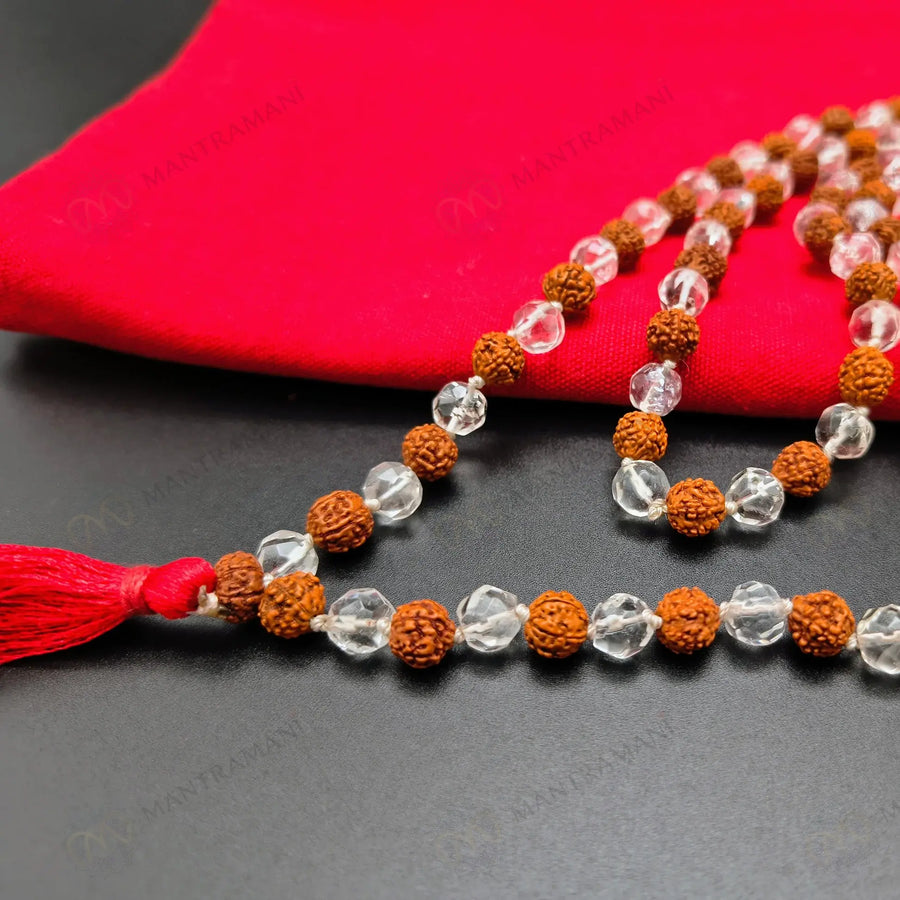
The 109th bead — the meru, sumeru or guru bead — is larger and sits at the join. It is not counted. When you reach it, you do not cross it: tradition is to turn the mala and go back the way you came for the next round.
This is why malas are sold as “108+1”.
How it is held
- Right hand, traditionally.
- Draped over the middle finger, moved with the thumb.
- The index finger does not touch the mala. This is the one rule stated consistently across sources — the index is the finger of ego and accusation.
- Move toward you, one bead per repetition.
- At the meru, turn and reverse.
Which material
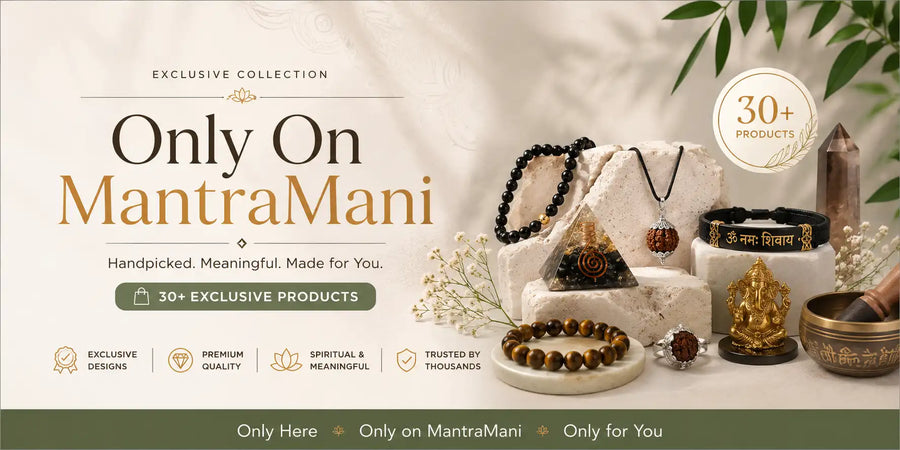
| Mala | Tradition | Price |
|---|---|---|
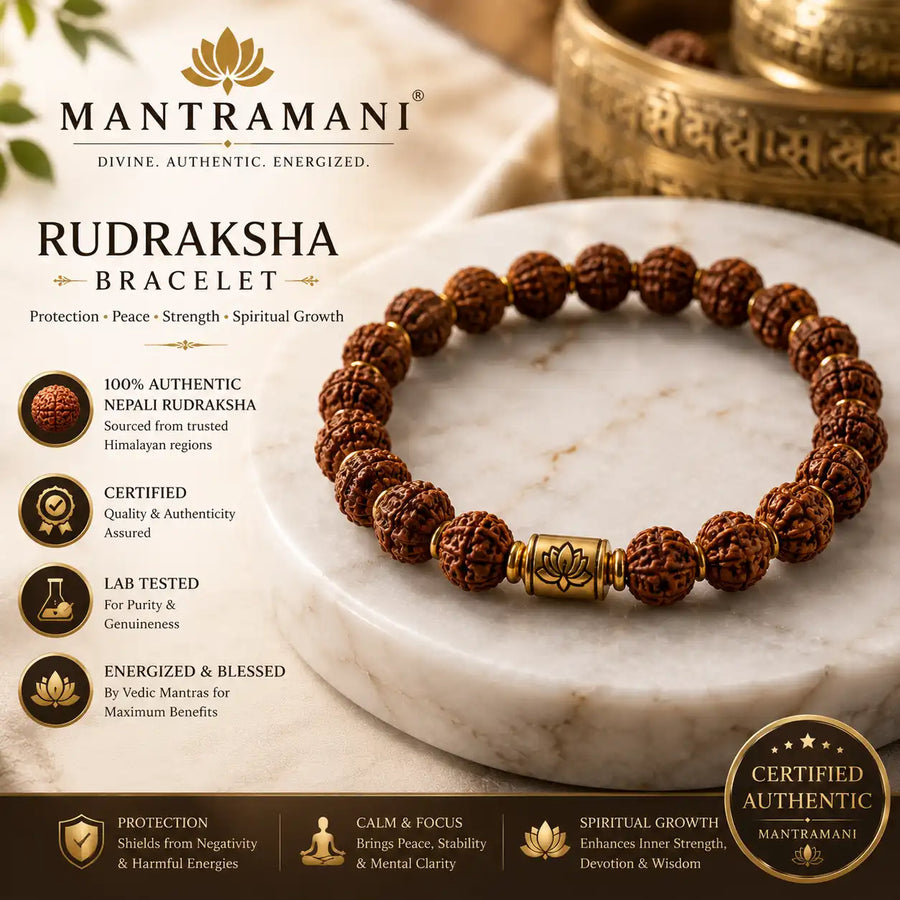
| Rudraksha | Shiva; meditation and calm | from ₹700, by mukhi |
| Tulsi | Vishnu and Krishna; devotional japa | ₹700–₹1,200 |
| Sandalwood | General japa and puja; the scent is part of it | from ₹1,199 |
| Karungali | Ebony; South Indian, protective | ₹1,099–₹1,389 |
| Crystal | Modern; matched to intention rather than devotion | Varies |
The one combination rule: tulsi and rudraksha are traditionally not mixed on the same mala, belonging to different devotional streams. See rudraksha vs tulsi vs sandalwood. Browse the japa mala range.
There is no shipping charge and no minimum order value. Cash on delivery adds ₹49; paying in advance takes a flat 5% off.
Care — the one thing that ruins malas
Never soak a mala. Wood and seed swell, and the thread rots from the inside where you cannot see it. Cleanse with smoke or sound. Oil rudraksha, sandalwood and karungali lightly once or twice a year to stop them drying and cracking.
Keep it in a cloth pouch, off the floor, and traditionally out of sight when not in use.
Frequently asked questions
Can I wear a japa mala as a necklace?
Rudraksha and karungali commonly are. A mala kept strictly for japa is traditionally not worn, and practice varies by family.
Why not cross the meru bead?
It represents the teacher or the summit. Turning back is the tradition; nobody in the practice steps over it.
Does a mala need to be energised?
Common practice is to keep it in the puja area overnight before first use. No formal rite is required for a personal mala.
Can women use a japa mala?
Yes. Some families observe customs around menstruation; those are household practices rather than rules about the mala.
Related reading
- Rudraksha mukhi guide: 1 to 14 mukhi meanings
- Karungali (ebony) benefits
- How to identify original rudraksha
- Rudraksha and gemstones: can you wear them together?
Written by Dr. Padmaja Shastri, in-house Vedic astrologer at MantraMani.
Astrological readings and gemstones are matters of faith and tradition. Nothing here is a medical, financial or outcome-based claim, and none of it is a substitute for professional advice. See our disclaimers.
Original Dhan Vriddhi™ Money Magnet Bracelet
100% Govt Lab-Certified natural gemstones energized with sacred Vedic mantras. Backed by MantraMani's 10X Authenticity Guarantee.