







Pitra Dosha: Remedies, Stones & What It Actually Means
Pitra Dosha — also written Pitru Dosh — is one of the most searched and most misrepresented terms in Indian astrology. It is worth being precise about it, because the honest version is narrower than the version sold online.
Two things to say at the start. First, Pitra Dosha is read from a birth chart, not inferred from misfortune. A run of difficulty is not a diagnosis. Second, the traditional remedies are rites, not purchases. A gemstone plays a supporting role at most, and any site telling you a bracelet resolves Pitra Dosha has inverted the tradition.
What it is
In classical jyotish, Pitra Dosha is an affliction held to arise when obligations to the ancestors (pitrs) are unfulfilled — rites not performed, or a debt carried down the line. Pitr means ancestor; dosha means flaw or affliction.
It sits alongside the other classical doshas — Mangal, Shani, Kaal Sarp — as a specific chart configuration with specific remedies attached.
How it is identified in a chart
The classical indicators centre on Surya (the Sun), which signifies the father and the paternal line, and on the ninth house, which signifies ancestry and dharma.
| Indicator | What is looked at |
|---|---|
| Sun with Rahu or Ketu | The most commonly cited combination, particularly in the ninth house |
| Afflicted ninth house | The house of father, ancestry and dharma under malefic influence |
| Ninth lord afflicted | Placement in dusthana houses, or combust |
| Sun and Saturn together | Read in some traditions as strain in the paternal line |
This requires a chart. Not a birth date, not a rashi — the full chart with time and place. Anyone offering to identify Pitra Dosha from your name or your date of birth alone is not reading it. Our consultation page exists for this.
What it does not mean
This section matters more than the rest, because the term is used to sell a great deal.
- It is not a curse. Classical texts describe an unmet obligation, not a punishment.
- It is not diagnosed from your life going badly. Difficulty is not evidence of a chart configuration.
- It does not explain childlessness, illness or bereavement. Anyone attaching it to those is making claims that are both unsupported and, in India, legally exposed.
- It is not fixed by buying an object. The remedies are rites performed by the family.
The traditional remedies
All of these are observances. None of them requires anything from us.
- Shraddha during Pitru Paksha. The primary remedy, performed in the fifteen days that in 2026 run 26 September to 10 October. Where the specific tithi is unknown, Mahalaya Amavasya on 10 October is the collective day.
- Tarpan. Water offerings with black sesame, made on the tithi of passing or through the fortnight.
- Pind daan at a recognised site — Gaya above all, and also Haridwar, Varanasi and Rameshwaram.
- Anna daan. Feeding brahmins, the poor, cows, crows and dogs. Crows in particular are traditionally held to carry the offering to the pitrs.
- Surya Arghya. Water offered to the rising sun daily, with the Surya mantra — the Sun being the graha at the centre of this dosha. See Sun (Surya) gemstones.
- Planting and tending a peepal tree, traditionally on Amavasya.
The Surya mantra
Chanted 108 times at sunrise, facing east:
ॐ ह्रां ह्रीं ह्रौं सः सूर्याय नमः
Om Hraam Hreem Hraum Sah Suryaya Namah
Where a stone fits — and where it does not
Honestly: a gemstone is not the remedy for Pitra Dosha. The rites are. What stones do in this context is strengthen the grahas involved, and they are worn alongside the observances rather than instead of them.
Where an astrologer has advised strengthening a specific graha, the relevant stones are:
| Graha involved | Stone | Note |
|---|---|---|
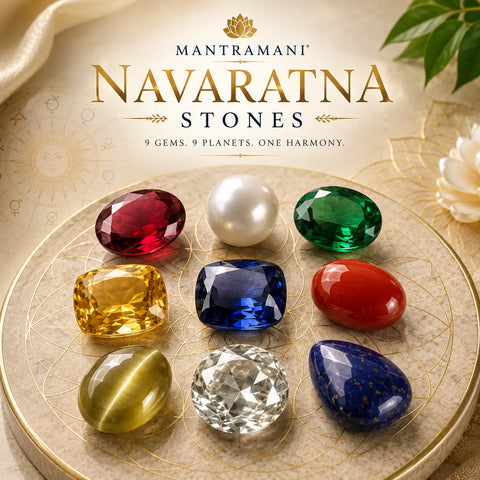
| Surya (Sun) | Manik (Ruby) | The navratna. On advice only |
| Surya — accessible | Red garnet, sunstone, tiger eye | No restriction; ₹700–₹900 |
| Rahu | Gomed (Hessonite) | On advice only |
| Ketu | Lehsunia (Cat’s Eye) | On advice only |
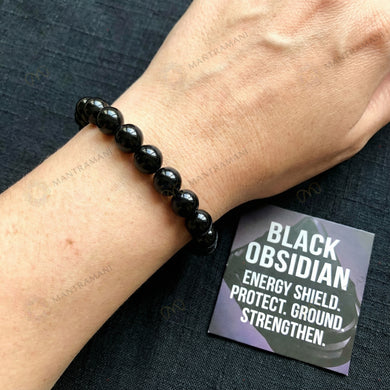
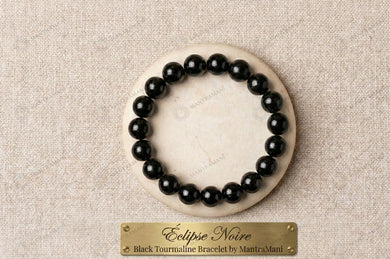
| General grounding | Hematite, black tourmaline | No restriction |
See the Pitra Dosha collection. We would rather you performed the shraddha and bought nothing than the reverse.
Frequently asked questions
How do I know if I have Pitra Dosha?
A qualified astrologer reads it from your full birth chart. It cannot be established from your name, your birth date alone, or from events in your life.
Can Pitra Dosha be removed permanently?
Classical practice treats the remedies as ongoing observance rather than a one-time cure — the annual shraddha is performed every year, not once.
Which stone is best for Pitra Dosha?
There is no single stone for it, and the question slightly misframes the tradition. Stones support the afflicted graha; the remedies are the rites.
Can I perform shraddha if I am not the eldest son?
Traditionally the eldest son performs it, but practice varies widely and most traditions provide for others — including daughters — where he cannot. Ask the priest who conducts your family’s rites.
Is Pitra Dosha the same as Kaal Sarp Dosha?
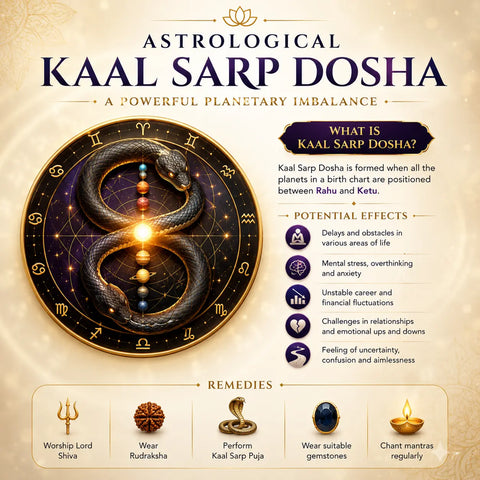
No. Kaal Sarp is a specific configuration of all planets between Rahu and Ketu. Pitra Dosha concerns the Sun, the ninth house and the ancestral line.
Do I need to travel to Gaya?
Gaya is the most traditional site for pind daan, but the rites can be performed at home or at any recognised site. The observance matters more than the location.
Related reading
- Pitru Paksha 2026: should you buy gemstones?
- Gemstones for Shani dosha and Sade Sati
- Kaal Sarp dosha: gemstone and remedy guide
- Sun (Surya) gemstones: the complete jyotish guide
Written by Dr. Padmaja Shastri, in-house Vedic astrologer at MantraMani.
Astrological readings and gemstones are matters of faith and tradition. Nothing here is a medical, financial or outcome-based claim, and none of it is a substitute for professional advice. See our disclaimers.
Original Dhan Vriddhi™ Money Magnet Bracelet
100% Govt Lab-Certified natural gemstones energized with sacred Vedic mantras. Backed by MantraMani's 10X Authenticity Guarantee.