
















How to Cleanse & Charge Crystals: 7 Methods That Actually Work
Almost every crystal guide tells you to cleanse your stones. Very few tell you that the most commonly recommended method will destroy several of the stones you own.
Salt water is the usual advice. It will pit selenite, rust hematite and pyrite, and dull turquoise permanently. So before the methods, here is the table that matters.
Which method is safe for which stone
| Stone | Water | Salt | Sunlight | Safe methods |
|---|---|---|---|---|
| Clear quartz, amethyst, rose quartz | Yes | Brief only | No — amethyst and rose quartz fade | Any dry method, moonlight |
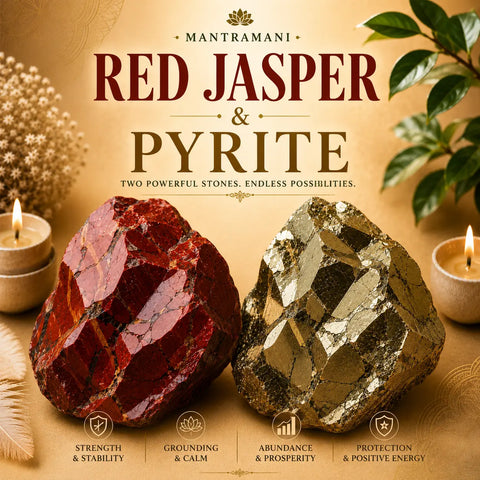
| Pyrite, hematite | No — rusts | No | Yes | Smoke, sound, selenite |
| Selenite | No — dissolves | No | Yes | Smoke, sound, moonlight |
| Turquoise, malachite, lapis lazuli | Brief rinse | No | No — fades | Dry cloth, smoke, sound |
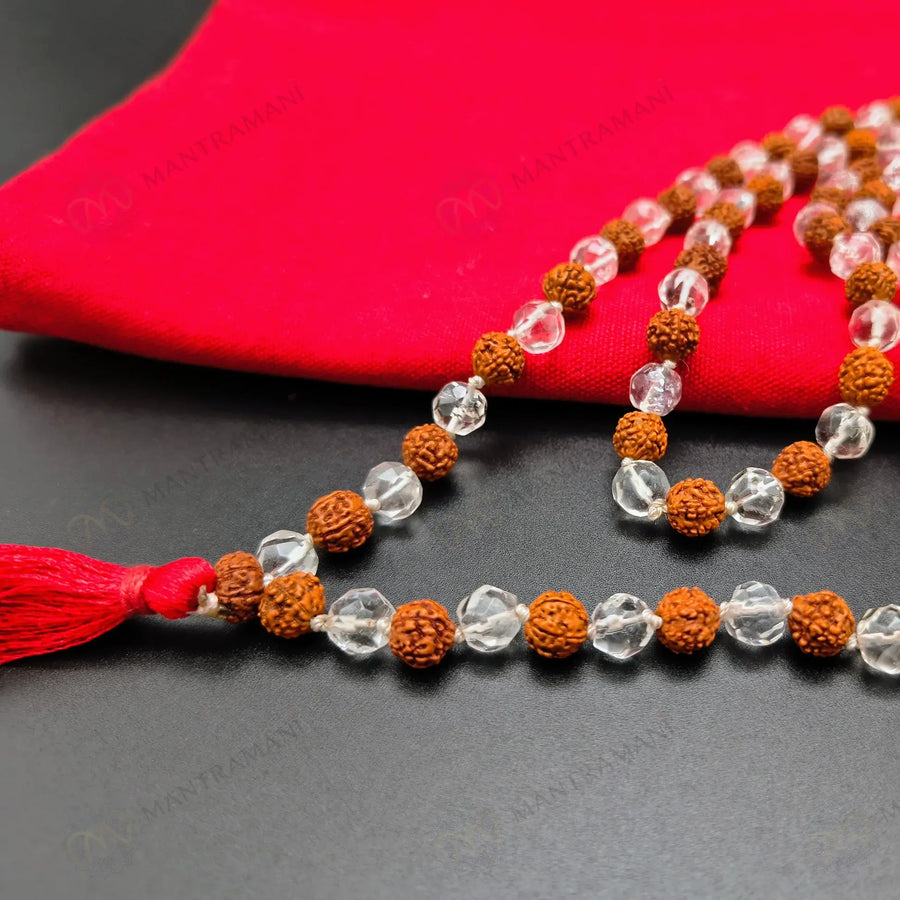
| Karungali, rudraksha, tulsi (wood/seed) | No — swells, thread rots | No | Brief only | Smoke, sound, oiling |
| Tiger eye, jasper, agate, onyx | Yes | Brief only | Yes | Almost anything |
The rule of thumb: if it is soft, porous, metallic or organic, keep it dry.
The seven methods
1. Running water
The simplest. Hold the stone under clean running water for thirty seconds, then dry it fully. Traditionally done under flowing water rather than a still bowl — the idea being that the water carries something away rather than sitting with it.
Safe for: the quartz family, agate, jasper, onyx. Never for: selenite, pyrite, hematite, malachite, wood or seed malas.
2. Incense or smoke
The most universally safe method, and the most Indian. Pass the piece through the smoke of dhoop, sambrani, camphor or sandalwood incense for a few seconds, turning it.
Western guides say white sage. Sambrani and guggul are the traditional Indian equivalents, are cheaper, and are not subject to the sourcing problems sage now has. We keep a small smudging range.
Safe for: everything. If you only learn one method, learn this one.
3. Sound
A bell, a singing bowl, a conch, or simply chanting near the stones. Ring for thirty seconds or so with the pieces nearby.
Safe for: everything. Particularly practical if you have many pieces — it handles a whole shelf at once.
4. Moonlight
Leave the stones on a windowsill overnight, traditionally on a full moon. This is the standard charging method rather than a cleansing one, and it is associated with Chandra.
Bring them in before the sun is high — that is the step people forget, and it is how amethyst gets bleached.
Safe for: everything.
5. Sunlight
An hour or two of morning sun. Traditionally associated with Surya and used for stones worn for confidence and vitality — citrine, carnelian, tiger eye.
Never for: amethyst, rose quartz, fluorite, celestite, turquoise. All of them fade, and the fading is permanent.
6. Selenite
Rest the piece on a selenite plate or beside a selenite tower overnight. Selenite is the one stone traditionally held not to need cleansing itself, which is why it is used to do the job for others.
Safe for: everything. The most convenient method if you own a lot of stones — it needs no attention at all. See how to use a selenite plate and the charging plate range.
7. Earth
Burying the stone in soil, or in a bowl of rice, for a night. Rice is the common household version in India and it is genuinely practical — it also draws out moisture, which suits pieces that have been worn in humidity.
Note: discard the rice afterwards. Do not cook it. That is the tradition and it is also just sensible.
Cleansing vs charging — they are not the same
| Cleansing | Clearing. Water, smoke, sound, salt, earth. |
| Charging | Restoring. Moonlight, sunlight, selenite. |
| Programming | Setting an intention. Holding the stone and naming what it is for. |
Most people do all three in one sitting, which is fine. The order is cleanse, then charge, then set the intention.
How often
Less often than the internet suggests. The conventional answer:
- A new piece: once, when it arrives, before first wearing.
- Worn daily: about once a month.
- A stone kept in the home — a tree, pyramid or frame: at festivals. Chhoti Diwali and the first day of Navratri are the traditional resets.
- After something difficult — illness in the house, an argument, a hospital visit: whenever you feel it is warranted. That judgement is the tradition; there is no schedule.
Three things you do not need to do
- Cleanse before every wear. Nobody in any tradition does this.
- Buy a special cleansing kit. Incense and a bell cover it.
- Worry that you have done it wrong. The methods vary enormously by region and family. Attention is the constant; the technique is not.
Frequently asked questions
Can I cleanse crystals with salt water?
You can for hard stones like quartz and agate, briefly, followed by a rinse and thorough drying. Do not use it on selenite, pyrite, hematite, turquoise, malachite or anything organic. Salt is the method most likely to cause damage, which is why it is last on our list rather than first.
What if I do not have selenite?
Incense smoke and sound do the same job and cost nothing.
Does moon phase matter?
Full moon is traditional for charging and new moon for clearing intentions. Any night works; the phase is a convention, not a requirement.
My bracelet broke. Does it need cleansing?
The tradition reads a broken bracelet as having finished something rather than as a fault. Clean the beads dry, and restring or replace.
Do rudraksha and karungali need cleansing?
Yes, but never with water — they swell and the thread rots. Smoke or sound, and a trace of oil once or twice a year. See karungali care.
Related reading
- Selenite plate: how to use it to cleanse and charge your crystals
- Crystal bracelet guide: types, benefits and how to choose
- How to wear a pyrite bracelet: hand, day, ritual and care
- Which chakra is blocked? Stones for each of the seven
Written by the MantraMani Gemstone Desk — our in-house sourcing and authentication team. Any astrological guidance here is reviewed by Dr. Padmaja Shastri, our in-house Vedic astrologer.
Gemstones and crystals are worn in Vedic and folk tradition as objects of faith. Nothing here is a medical, financial or outcome-based claim. See our disclaimers.